
AT A GLANCE
- Short answer
- No universal repeat interval has been established
- Result timeline
- Change can continue developing over 2–3 months
- Official duration language
- Facial results may last a year or more
- Repeat decision
- Reassess anatomy, response, recovery, records and goals
- Reviewed
- 8 November 2026
The short answer: there is no universal repeat schedule
Ultherapy Prime can be considered again after a previous treatment, but research has not established one interval that every person should follow. Most studies assess what happens after a single microfocused-ultrasound treatment. They do not randomize patients to different maintenance schedules and identify a best repeat date.
The current manufacturer says the final result usually develops over two to three months and that one facial treatment may last a year or more. That is duration language, not an instruction to repeat treatment automatically at 12 months. Individual response, aging, anatomy, treatment area and the original protocol can all change the next decision.
AP865's current official program lists Ultherapy Prime. That confirms the consultation scope, not personal suitability or a standing annual appointment. A repeat plan should begin with the previous record, current examination and a clear reason for considering another session.
What the evidence can—and cannot—say about timing
A 2023 systematic review examined 16 studies of single microfocused-ultrasound treatments for facial tightening. Follow-up commonly occurred at 90 and 180 days, with fewer observations at one year. The review found varied degrees of improvement but also emphasized heterogeneous methods, limited objective measurement and the need to optimize treatment regimens. It did not establish a repeat schedule.
A separate 2023 meta-analysis included 13 studies and 477 participants. It reported pooled response and satisfaction outcomes at 90 and 180 days, while calling for larger randomized studies and better treatment parameters. Again, the question was treatment response, not whether an early, annual or longer interval is best.
A Pan-Asian expert consensus discusses maintenance intervals that may vary with age and clinical condition, including a 12-to-18-month pattern in selected practice. This is expert guidance, not a trial comparing intervals. It supports individualized planning; it does not make yearly treatment a medical rule.
Why the previous response should be reviewed first
A useful repeat assessment starts with the exact device, date, treatment area, transducer depths, line map, energy settings, comfort, immediate reaction and later symptoms. The physician should ask what change appeared, when it became noticeable, whether it remained meaningful and what did not change.
Standardized photographs can support that review when position, expression, distance and lighting are consistent and storage consent is clear. Photographs still cannot identify the tissue responsible for every concern. Weight change, facial volume, muscle activity, skin laxity and structural aging may all alter appearance between visits.
The next treatment should not simply reproduce the old line count or map. Real-time ultrasound visualization is used to assess tissue layers and coupling during treatment, but the current anatomy and safety boundaries still need to be evaluated again. A responsible outcome may be another session, a longer observation period, another treatment category or no procedure.
When a maintenance discussion may fit—and when to pause
A maintenance discussion may be reasonable when the original treatment is documented, the person has had enough time to judge the gradual response, recovery was understood and an examination confirms that the same broad tissue concern remains within Ultherapy's role. The goal should be specific and realistic rather than assuming that repeated treatment will accumulate a predictable lift.
Pause when the previous device, area or date is uncertain; the response is still evolving; the treatment record is missing; or an earlier symptom remains unexplained. New or persistent numbness, weakness, tingling, significant tenderness, a welt, burn, scar or worsening pain needs assessment rather than another energy session.
The current Ultherapy Prime instructions list open wounds or lesions, severe or cystic acne in the treatment area, active electronic implants and metal implants in the treatment area among contraindications. They also identify situations requiring caution, including treatment over certain implants, fillers and keloids. Personal eligibility must be decided against the current instructions and an examination, not an online interval.
How Ultherapy Prime works—and why results need time
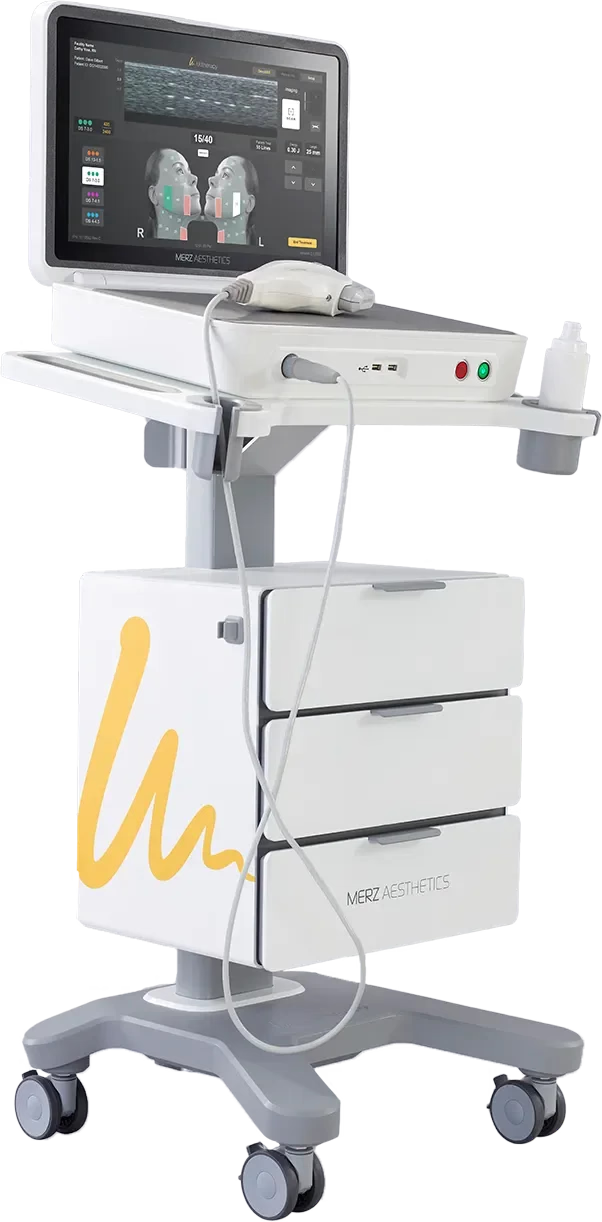
Ultherapy Prime delivers focused ultrasound energy at selected tissue depths while the clinician uses real-time ultrasound imaging to visualize dermal and subdermal layers. The FDA record identifies the Ulthera System Prime as a focused-ultrasound device, while the current US instructions specify cleared treatment areas and safety requirements.
The energy creates small thermal-coagulation zones below the surface, initiating a wound-healing and collagen-remodeling response. That process is gradual. A person may notice early change, but the manufacturer describes the final result as developing over roughly two to three months, and studies commonly evaluate outcomes at 90 days or later.
Repeating treatment before the earlier response can be interpreted may blur both benefit and risk. More lines, more depths or a shorter interval should not be assumed to create a better result. Anatomy, treatment density and technique affect both outcomes and safety, so planning belongs with a trained physician using the current device instructions.
Recovery and uncommon risks still matter on a repeat visit
The current Ultherapy Prime instructions describe redness, swelling, procedure discomfort and tenderness as expected possibilities. Welting and bruising may also occur. A previous easy recovery does not guarantee that a later session will feel or heal the same way because area, map, settings and tissue condition may differ.
Transient nerve effects can include local weakness, numbness, pain, tingling or altered sensation. Burns and scarring are uncommon but recognized risks when technique is incorrect. Post-marketing surveillance has also identified events that require professional evaluation. Individual risk cannot be calculated from a guide page.
Seek prompt medical review for progressive weakness, severe or increasing pain, a suspected burn, blistering, marked swelling, persistent altered sensation, eye symptoms or another unexpected change. International visitors need a local observation window, a written record and a clear follow-up route; remote messaging cannot replace an examination when a significant problem develops.
Do not turn maintenance into automatic treatment stacking
A repeat Ultherapy discussion may occur alongside Thermage, fillers, threads, skin boosters or other energy treatments. That does not make same-day or same-trip treatment automatically appropriate. Each intervention has a different target, evidence base, safety profile and recovery pattern.
The physician should define the purpose of every proposed step, review earlier product and device records, choose an order and explain the interval. Staging can make response and unexpected symptoms easier to interpret, especially when an international visitor has limited time in Seoul.
Waiting is a valid maintenance decision when the record is incomplete, the goal is unclear or the likely additional benefit does not justify another intervention. Continuity means keeping an accountable history and preserving the option to change course—not repeating a machine because a calendar anniversary has arrived.
How AP865 can support long-term continuity
AP865 can compare the prior Ultherapy record with a current examination and standardized photographs before discussing another session. The consultation should explain what appears to have changed, what remains outside focused ultrasound's role and why the proposed timing is reasonable for this person.
If treatment proceeds, the record should identify the device, treatment area, transducer depths, line map, settings, expected recovery and follow-up route. Privacy choices for photography and cross-border communication should be explicit, particularly when an international visitor is sharing records from another clinic.
The objective is not to create a recurring appointment by default. It is to make each decision better informed than the last one. The appropriate plan may be repeat Ultherapy Prime, more time, a different sequence or no treatment.
COMMON QUESTIONS
Before you book
Do I need Ultherapy Prime every year?
No. The manufacturer says facial results may last a year or more, and expert consensus discusses maintenance intervals that vary by age and clinical condition. Neither creates a universal annual requirement; a physician should reassess the previous response and current anatomy first.
Can Ultherapy Prime be repeated before one year?
An article cannot set an earlier personal interval. Most studies evaluate one treatment rather than comparing repeat schedules, and results may continue developing for two to three months. Earlier retreatment requires a fresh examination, complete records and a clear clinical reason.
Do Ultherapy Prime results stop after one year?
No fixed expiry date applies to everyone. The manufacturer says facial results can last a year or more, while study follow-up and response vary. Duration alone does not determine whether another treatment is appropriate.
Should a repeat session use the same line count and depths?
Not automatically. The physician should reassess anatomy, treatment area, prior response, symptoms and current goals. A later session may need a different map or may not be appropriate at all.
Can repeat Ultherapy be combined with other treatments?
Possibly, but combination is not automatic. Every treatment needs its own indication, safety review, sequence, interval and recovery plan. Staging may make results and unexpected symptoms easier to interpret.
SOURCES & FURTHER READING
Check the original information
- AP865 — official current program overview
- Ultherapy — current official FAQ and result-duration information
- Ultherapy — current Ultherapy Prime Instructions for Use
- US FDA — Ulthera System Prime 510(k) record K233996
- PMC — 2023 systematic review of single-treatment microfocused ultrasound
- PubMed — 2023 systematic review and meta-analysis of facial MFU
- PMC — Pan-Asian MFU-V consensus and individualized maintenance planning
Published November 8, 2026 · Last reviewed for factual accuracy November 8, 2026. Product availability, regulation and treatment protocols can change.