
AT A GLANCE
- Energy
- Microfocused ultrasound
- Common goal
- Non-surgical lifting and tightening
- Recovery
- Usually limited, but tenderness varies
- Planning focus
- Depth, map, anatomy and follow-up
What Ultherapy Prime actually does
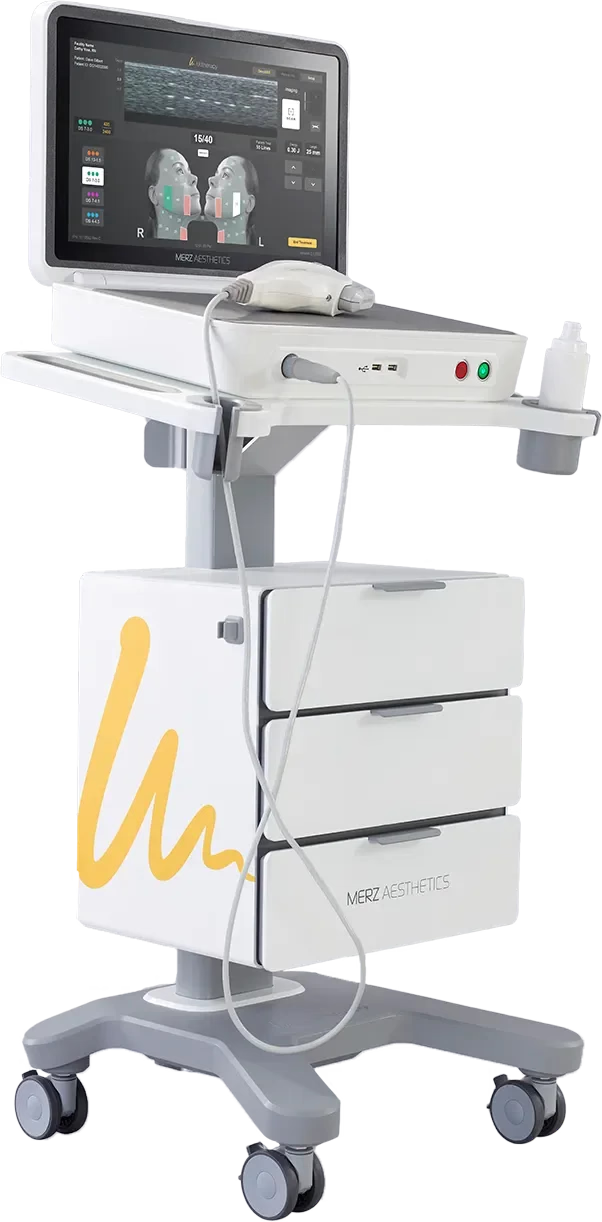
Ultherapy Prime delivers small points of ultrasound energy below the skin surface. Its real-time ultrasound image helps the treating clinician see tissue layers before placing energy. The system can target 1.5 mm, 3.0 mm and 4.5 mm depths, depending on the area and plan.
Those focused points create a controlled healing response that may support gradual collagen remodeling. Changes tend to develop over time rather than appearing as an instant, dramatic lift.
It does not remove skin and it does not duplicate a surgical facelift. A useful consultation starts by deciding whether the concern is skin laxity, volume loss, muscle pull, fat distribution or a combination.
Who may be a reasonable candidate
People often ask about Ultherapy for a softer jawline, early lower-face laxity, brow support or skin that feels less firm. Suitability depends on anatomy, skin thickness, medical history and the degree of change you expect.
Very thin faces, significant volume loss and more advanced laxity need particular care. More lines are not automatically better: depth, pattern and energy matter as much as the number on a package.
- Ask which areas and depths the proposed line count covers.
- Share previous fillers, threads, energy treatments and surgery.
- Explain your pain tolerance and any event or flight deadline.
Why depth and line count are planning variables
Ultherapy Prime transducers are selected for different focal depths, but a depth label is not a stand-alone prescription. The physician still has to decide where treatment is appropriate, where tissue is thin, where volume is limited and which structures should be avoided. The same total line count can therefore describe very different maps.
Real-time ultrasound imaging is useful because it helps the clinician visualize tissue before and during energy placement. It does not diagnose every cause of facial heaviness, and it does not make a standardized map appropriate for every person. A careful plan connects each treated zone to a specific concern and explains what will deliberately remain untreated.
For a lean face or a face with previous filler, threads or surgery, records and an in-person examination are especially important. AP865 treats restraint as part of the plan: the appropriate answer may be a smaller area, a different depth strategy, a staged approach or no ultrasound treatment.
What treatment and recovery may feel like
During treatment, patients may feel brief pulses of heat, tingling or deeper tenderness. Comfort varies by area and individual sensitivity. Discuss pain-management options before the appointment rather than assuming every clinic uses the same protocol.
Temporary redness, swelling, tenderness, bruising or altered sensation can occur. Most people return to routine activities quickly, but a low-downtime treatment is not the same as a no-risk treatment.
Results and timing vary. Photographing the same angles in the same light is more useful than judging day-to-day changes in a mirror.
How AP865 CLINIC plans the treatment
AP865 CLINIC begins with an in-person physician assessment of facial structure, skin thickness and the direction of laxity. Ultherapy Prime may be used alone or discussed alongside Thermage FLX and other options when different tissue layers contribute to the concern.
The aim is a proportionate plan, not a standard line count for every face. Your doctor may also recommend waiting, treating a smaller area or choosing a different modality.
Travel timing, privacy and follow-up
International visitors should share flight and event dates before treatment, not after. Although many people resume normal activity promptly, tenderness, swelling, bruising or altered sensation can be inconvenient when a schedule is inflexible. A low-interruption procedure is not a guarantee of being photo-ready on a particular day.
A useful AP865 record includes the areas treated, transducer depths and treatment date. Keeping that record private but accessible supports continuity if you return to Seoul or see another clinician at home. It also gives a follow-up conversation something more reliable than memory or a filtered photograph.
COMMON QUESTIONS
Before you book
How soon before an important event should I book?
Allow flexibility because tenderness, swelling or bruising can occur even when downtime is usually limited. Share the event date before treatment so the doctor can advise a sensible margin.
Is Ultherapy Prime better than Thermage FLX?
They use different energy and tissue targets. One is not universally better. Anatomy, skin thickness, laxity pattern and goals determine whether either—or a carefully designed combination—makes sense.
Can I have it during a short Seoul trip?
It may fit a short itinerary, but treatment is confirmed only after consultation. Build in time for assessment and avoid scheduling it immediately before an inflexible event or flight.
Does a larger line count guarantee a stronger result?
No. Line count does not show where each line is placed, which depth is used, how anatomy was assessed or whether the map matches the concern. More treatment is not automatically more appropriate.
What records should I keep after treatment?
Keep the treatment date, treated areas, platform and transducer information supplied by the clinic, plus aftercare and contact instructions. Those details help future clinicians understand what was done.
SOURCES & FURTHER READING
Check the original information
- Ultherapy — How ultrasound skin lifting works
- Ultherapy for physicians — treatment depths and visualization
- Ultherapy PRIME — official instructions for use
- AP865 CLINIC — official treatment program overview
Published July 31, 2026 · Last reviewed for factual accuracy October 15, 2026. Product availability, regulation and treatment protocols can change.