
AT A GLANCE
- Shared category
- Noninvasive monopolar radiofrequency
- XERF Eye
- 6.78 MHz and 2 MHz platform with newer small applicators
- Eye Thermage
- 6.78 MHz platform with a 0.25 cm² Eye Tip
- Safety review
- Confirm the exact device, tip and current recall status before treatment
- Reviewed
- 28 October 2026
The short answer: these are not interchangeable eye treatments
XERF Eye and Eye Thermage are both noninvasive monopolar-radiofrequency approaches, but a shared energy category does not make them equivalent. They differ in frequency options, applicator design, regulatory wording, depth strategy and maturity of eye-area evidence. No head-to-head clinical trial identified for this guide establishes one as universally better.
AP865's current official program lists both XERF EYE and THERMAGE FLX EYE. That confirms the scope of the consultation, not personal suitability or a promise that either device can solve every under-eye concern. Lax skin, dynamic lines, hollowing, fat pads, edema, pigment and eyelid position are different findings, and radiofrequency does not make them interchangeable.
The useful question is therefore not, 'Which machine is stronger?' It is, 'What is causing the visible concern, which exact eye-area tip and treatment boundary are proposed, and what evidence and safety checks support that plan?'
What changes on the XERF Eye side
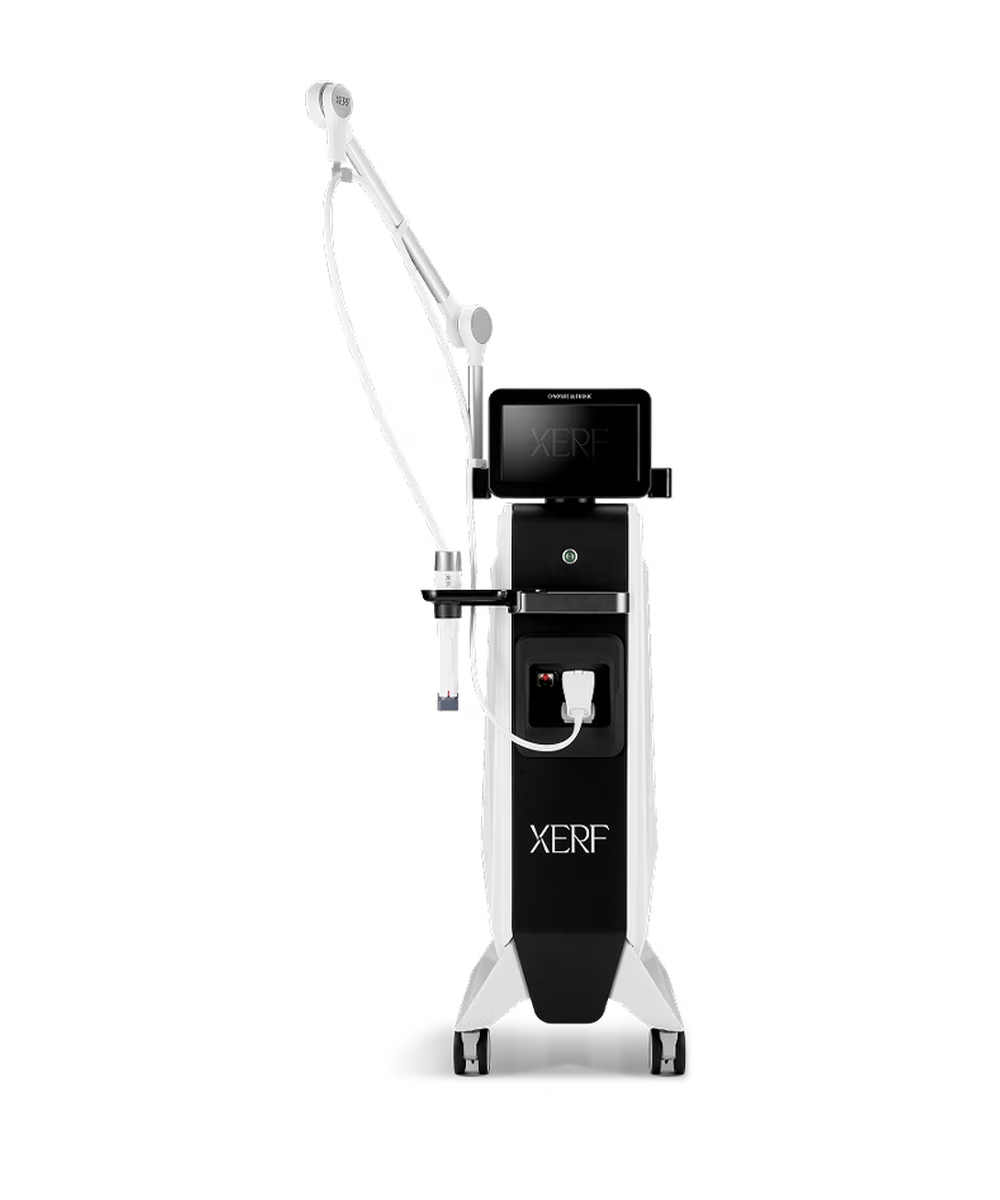
The current US FDA 510(k) summary describes XERF as a noninvasive monopolar RF system that generates 6.78 MHz and 2 MHz energy. It lists 12 active-electrode tips for different applications and treatment zones, including 10 and 05 tip pattern sizes. The US indication in that clearance is dermatologic and general surgical electrocoagulation and hemostasis; it does not itself state an eye-wrinkle indication.
A 2026 protocol report describes two newly engineered small XERF applicators for periorbital treatment. The paper explains a proposed approach and reports no unexpected or persistent reactions in the procedures performed at the time, but it explicitly says its assumptions are not evidence-based conclusions and that objective outcomes are still being collected. It should not be read as a comparative trial or a universal protocol.
Cynosure Lutronic describes the wider XERF platform as combining 6.78 MHz and 2 MHz, with three depth settings, impedance feedback and surface cooling. Those platform controls still do not determine whether the upper eyelid, lower eyelid, brow or lateral eye is appropriate for an individual. Confirm the locally authorized indication, exact applicator and treatment boundary with the physician.
What changes on the Eye Thermage side
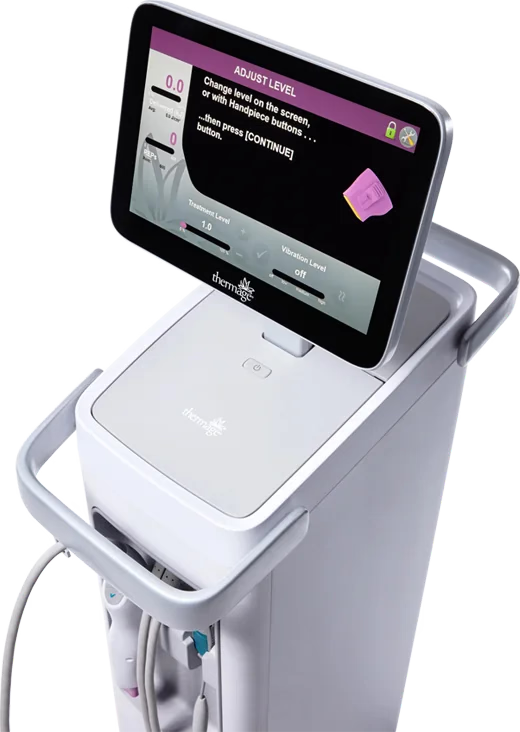
Thermage FLX uses 6.78 MHz monopolar RF. Its current manufacturer page identifies a 0.25 cm² Eye Tip for precise, shallow heating around the periorbital area and eyelid. The US FDA clearance explicitly includes noninvasive treatment of periorbital wrinkles and rhytids, including the upper and lower eyelids.
That regulatory record is not proof of a better personal result. Older prospective studies of the Thermage eye tip reported mild-to-moderate changes in selected participants and also documented that ocular protection was integral to the procedure. The evidence predates the latest FLX generation and cannot be converted into an individual outcome guarantee.
The manufacturer warns that treatment of the upper or lower eyelids, or within the orbital rim, requires plastic eye shields rather than metal shields. It also says vibration should not be used around the eye while those shields are in place because displacement can increase the risk of corneal abrasion or ocular injury.
The evidence is asymmetric, so a winner claim would be misleading
Eye Thermage has an explicit US periorbital indication and older human studies focused on its 0.25 cm² tip. XERF has a newer dual-frequency platform record and an early 2026 small-applicator protocol paper, but the paper is not a controlled outcome study and there is no direct XERF Eye versus Eye Thermage trial in the sources reviewed.
This asymmetry does not prove that one platform will be more effective for a particular face. Regulatory language, engineering features and clinical outcomes answer different questions. A clearance establishes an allowed use in one jurisdiction; a technical feature describes how a device can be configured; a clinical study describes what happened in a defined group under a defined protocol.
A responsible consultation should keep those layers separate. It should also explain why observation, skincare, another treatment category or referral may fit better when the concern is primarily pigment, volume loss, significant eyelid position change or another condition that RF cannot diagnose.
Who may discuss eye-area RF—and when to pause
Someone with mild eye-area laxity or rhytids may discuss noninvasive RF after an in-person physician assessment confirms the actual target. Suitability cannot be inferred from age, a selfie or a machine name. The examination should distinguish skin laxity from hollowing, fat-pad prominence, fluid retention, muscle movement and structural eyelid findings.
Pause when the area has an active skin problem, an open lesion, unexplained swelling, altered sensation, an unresolved reaction or recent surgery that has not been reviewed. Disclose all implants, eye procedures, permanent makeup, previous energy treatments and injectables by name, date and exact location. Thermage is contraindicated for implantable pacemakers and other active electrical devices; the treating physician must check the current instructions for either proposed platform rather than transfer one device's list to the other.
A plan should not automatically cover every area around the eyes or combine another device or injectable on the same day. Staging can make recovery easier to interpret and can preserve the option to stop when the diagnosis, treatment boundary or follow-up window is uncertain.
- Which finding is being targeted: laxity, rhytids or something else?
- Will the upper eyelid, lower eyelid, brow or lateral eye be treated?
- What exact tip or applicator will be used, and is it authorized locally for that area?
- What ocular protection is required for the proposed treatment boundary?
- Would staging provide a clearer and safer follow-up plan?
Current XERF recall status must be checked precisely
The US FDA recall database, updated 26 October 2026, lists an open Class II recall for specified XERF EFFECTOR 60 units manufactured from 1 April through 20 August 2025. It names particular catalog numbers and serial or lot identifiers and instructs consignees to stop using affected units and return them.
That record names the Effector 60; it does not establish that every XERF console or the newer small eye applicators are affected. It also does not justify ignoring the recall because a different applicator is proposed. Before any XERF treatment, the clinic should document the console and tip identification, confirm that no affected unit is in use and follow the current manufacturer and regulator instructions.
Recall status can change. A public article cannot replace a current inventory check on the day of treatment, and an equipment photograph cannot establish the serial number or corrective-action status of the installed system.
Recovery and risk need an eye-specific plan
Temporary warmth, redness, swelling, tenderness or bruising may occur after noninvasive RF. Thermage's current safety information also lists uncommon but important reactions including blisters, burns, scabbing, scarring, surface irregularities, altered sensation, lumps or nodules and pigment change. Small early XERF reports cannot rule out uncommon events.
The eye area adds a separate safety layer. Eye pain, vision change, marked light sensitivity, persistent tearing, suspected corneal injury, a burn, blister, severe or progressive swelling, new weakness or another rapidly worsening symptom needs prompt in-person assessment. It should not be managed as routine recovery through photographs alone.
An overseas visitor should leave enough time for local reassessment and should not treat 'minimal downtime' as a departure guarantee. The written plan should state expected reactions, urgent warning signs, who will review an unexpected response and where to obtain eye or emergency care after leaving Seoul.
How AP865 can keep the decision private and continuous
A private AP865 consultation should begin with the person's eye concern, medical and procedure history, examination and travel responsibilities—not a preset preference for one platform. The physician can then explain whether RF fits, which boundary is appropriate and why a smaller or staged plan may be more coherent than treating more areas at once.
If treatment proceeds, keep the device model, tip or applicator, treatment area, date, eye-protection method, expected response, personal aftercare and contact route in the record. For XERF, add the completed current recall and equipment-identification check; for Eye Thermage, document the eye tip and required ocular protection.
Continuity is part of the treatment design. Agree on when photographs or an in-person review would be meaningful, how privacy will be protected when eye-area images are exchanged and which records should travel with the visitor for later care.
COMMON QUESTIONS
Before you book
Are XERF Eye and Eye Thermage the same type of treatment?
Both are noninvasive monopolar-RF approaches, but they are not interchangeable. XERF combines 6.78 MHz and 2 MHz with newer small applicators, while Thermage FLX uses 6.78 MHz with a 0.25 cm² Eye Tip and has an explicit US periorbital indication.
Is XERF Eye better because it uses two frequencies?
No head-to-head trial identified for this guide shows that two frequencies produce a better eye-area result. Frequency options are engineering features, not a personal suitability decision or outcome ranking.
Are plastic eye shields needed for Eye Thermage?
Yes when treating the upper or lower eyelids or within the orbital rim, according to current Thermage safety information. It specifies plastic rather than metal shields and warns against vibration around the eye while shields are in place.
Does the XERF recall apply to every XERF Eye treatment?
The current US FDA record names specified XERF EFFECTOR 60 catalog and serial or lot identifiers, not every XERF console or small eye applicator. The clinic should still verify the exact installed equipment and current corrective-action status before any XERF treatment.
Which eye concerns may not be solved by either RF device?
Hollowing, fat-pad prominence, edema, pigment, muscle movement and structural eyelid position are not the same as skin laxity or rhytids. An in-person physician assessment should identify the concern before choosing RF or deciding not to treat.
SOURCES & FURTHER READING
Check the original information
- AP865 — official current program overview
- Cynosure Lutronic — official XERF platform information
- US FDA — XERF 510(k) summary K251327
- US FDA — current XERF EFFECTOR 60 recall record
- PubMed — 2026 XERF small-applicator periorbital protocol report
- Thermage — official FLX Eye Tip and safety information
- US FDA — Thermage FLX 510(k) summary K170758
- US FDA — Thermage eyelid indication and eye-shield record K052936
- PubMed — Thermage eyelid-tip safety evaluation
Published October 28, 2026 · Last reviewed for factual accuracy October 28, 2026. Product availability, regulation and treatment protocols can change.