
AT A GLANCE
- Energy
- High-intensity non-focused parallel ultrasound
- Thermal zone
- About 0.5–2 mm, centered around 1.5 mm
- US FDA facial uses
- Lines, wrinkles, eyebrow, submental and neck lifting
- Reviewed
- 11 October 2026
The short answer: 1.5 mm describes a dermal target, not a guaranteed outcome
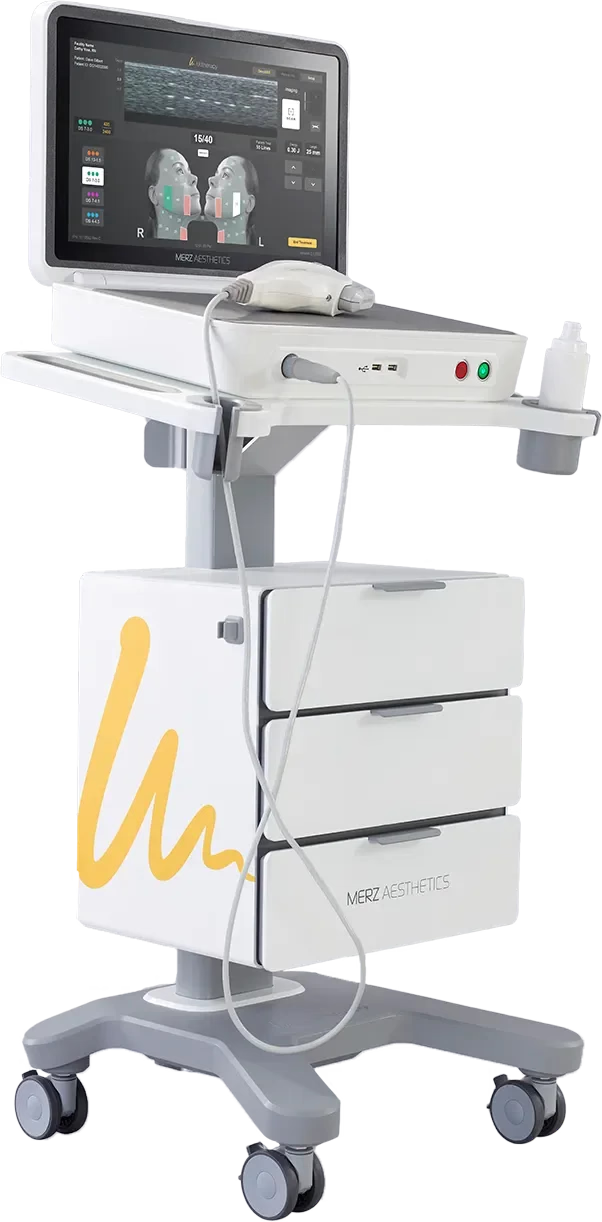
Sofwave uses high-intensity, high-frequency, non-focused ultrasound beams. Manufacturer technical material describes thermal treatment zones from about 0.5 to 2 mm, centered at 1.5 mm in the mid dermis, while integrated cooling monitors and protects the skin surface.
The number is useful because it identifies the intended tissue layer. It does not decide whether a person needs treatment, whether laxity rather than volume loss is the main concern, how much energy should be used, or whether a visible change will meet an individual's expectations.
AP865 lists Sofwave for elasticity and fine-line concerns. Individual suitability still requires an in-person medical assessment rather than choosing a device from a depth number alone.
What the current US FDA clearance actually covers
The current US FDA 510(k) summary describes Sofwave as a non-invasive dermatological aesthetic device for improving facial lines and wrinkles, lifting the eyebrow, and lifting lax submental and neck tissue in adults aged 22 and older. Later clearance also includes upper-arm skin laxity, and the system has separate cleared uses for short-term cellulite improvement and acne scars.
A US clearance is not a promise that every treatment area or marketing phrase applies in Korea. Local labeling, device configuration, clinician training and the indication being discussed should be confirmed during consultation.
For a facial appointment, ask the clinician to name the exact concern and treated area. 'General anti-aging' is too broad to explain why a dermal ultrasound plan is being considered.
Why the depth number does not replace an anatomy-based consultation
A softer jawline, fine lines, dryness, facial volume loss and deeper structural laxity can look similar in photographs but involve different tissues. A device centered in the dermis should not be presented as a universal answer to every change associated with aging.
Skin thickness, baseline facial volume, prior filler, scars, active inflammation and the position of bony and soft-tissue landmarks can change the discussion. The manufacturer's safety information says treatment is not recommended directly over areas with dermal filler and lists facial metal implants among precautions.
A high-end consultation should be able to conclude that Sofwave is appropriate, that another approach better matches the concern, that treatments should be staged, or that no procedure is advisable at that visit.

The published evidence is promising but still limited
A 2023 study of 36 participants evaluated one lower-face treatment and reported statistically significant changes in measured nasolabial-fold and marionette-line depression volume at one and three months. The mean immediate pain score was 6.64 on a 0–10 scale, and no adverse events were reported in that study.
A separate 2024 prospective study enrolled 15 people aged 40 to 69, used two treatments and reported photographic improvement at three and six months. Its mean treatment pain score was 5.6 on a 0–10 scale.
These are small studies with different protocols, treatment counts and outcome methods. They support further clinical use and research, but they do not establish a universal number of sessions, a guaranteed degree of change or an exact timeline for an individual traveler.
Expected recovery should not be confused with zero risk
The manufacturer says many people can return to normal activities immediately and that mild redness or swelling may settle within hours. Treatment sensation varies, and published facial studies reported moderate average pain rather than a pain-free experience.
The manufacturer's safety information lists possible significant pain, tenderness, pigment change, persistent redness or swelling, ulceration or erosion, and bruising. US FDA adverse-event reports also exist; reports are important safety signals but do not by themselves establish how often an event occurs or prove its cause.
Ask what reaction the clinic expects for your treatment area, which symptoms should prompt a photograph or call, and which require an in-person examination. Severe or increasing pain, blistering, a burn-like area, progressive swelling, persistent color change, new numbness, weakness or another rapidly worsening symptom needs clinical review.
- Plan enough local time for assessment if your reaction is not settling as expected.
- Do not stack another energy treatment or injectable only because the skin looks calm immediately afterward.
- Follow the treating clinician's written aftercare rather than a generic social-media timeline.
- Use urgent local care for severe or rapidly worsening symptoms.
Who should pause before booking
The manufacturer's current safety information lists open wounds or lesions, severe or cystic acne in the intended area, and pacemakers or electronic implants in the treated area as contraindications. It also lists active infection or skin disease, significant scarring, facial metal implants, recent retinoid use, some medicines and treatment directly over dermal filler among precautions.
An online guide cannot clear those issues. Share your medical history, current medicines and supplements, implanted devices, skin conditions, previous energy treatments, injectable product names, areas and dates with the treating physician.
If the history is incomplete or the skin is actively inflamed, postponement can be the safer plan. A short Seoul itinerary should not pressure the consultation toward treatment.
How AP865 can plan a more considered Sofwave visit
Begin with the change you notice rather than the device you want. The consultation should separate fine lines from dryness, dermal laxity, facial volume change and deeper support, then explain whether Sofwave's treatment layer matches the goal.
If treatment is considered, ask for the exact area, treatment rationale, comfort plan, expected reaction window, follow-up channel and the reason for combining or separating any other procedure. More treatments in one visit are not automatically a more complete plan.
AP865's concierge approach is most useful when it preserves room for judgment: a private assessment, a plan paced around the person, clear records and continuity after the appointment.
Questions to take into the consultation
Ask the physician which tissue and visible concern the 1.5 mm-centered treatment is intended to address in your face. Ask what the plan cannot change, what evidence applies to the proposed area and how previous filler or energy procedures affect mapping.
Confirm the expected treatment sensation, ordinary recovery, warning signs, how long the clinic wants you nearby and who will review you after you leave Korea. If an event or flight date matters, share it before a plan is finalized rather than asking for a guaranteed photo-ready deadline afterward.
A good answer may be Sofwave, another option, staged care or waiting. The purpose of a high-end consultation is not to justify a device; it is to make a defensible plan for one person.
COMMON QUESTIONS
Before you book
What does Sofwave's 1.5 mm depth mean?
Manufacturer technical information describes thermal treatment zones from about 0.5 to 2 mm, centered at 1.5 mm in the mid dermis. It identifies the intended tissue layer, but it does not predict individual suitability, settings or results.
Is one Sofwave treatment enough?
Published studies have used both one- and two-treatment protocols. Those small studies do not establish one universal course, so the number and spacing of treatments should follow the concern, response, safety assessment and clinician's plan.
Can I return to normal activities after Sofwave?
The manufacturer says many people can return to normal activities immediately, with possible mild redness or swelling. Individual recovery varies, and persistent or worsening symptoms should be reviewed rather than treated as routine downtime.
Who should not have Sofwave treatment?
Manufacturer contraindications include open wounds or lesions, severe or cystic acne in the intended area, and pacemakers or electronic implants in the treated area. Additional precautions require a complete medical and treatment history review by the physician.
What should an overseas visitor ask before Sofwave in Seoul?
Ask which concern and tissue layer are being treated, what the plan cannot change, the expected sensation and recovery, warning signs, how previous filler or devices affect mapping, and how follow-up will work after leaving Korea.
SOURCES & FURTHER READING
Check the original information
- AP865 — official current program overview
- US FDA — Sofwave 510(k) summary K233104
- Sofwave — official technology overview
- Sofwave — official safety information and contraindications
- PubMed — 2023 study of 1.5 mm parallel-beam ultrasound for skin tightening
- PubMed — 2024 prospective study of facial skin laxity
- US FDA — Sofwave total product life-cycle and adverse-event reports
Published October 11, 2026 · Last reviewed for factual accuracy October 20, 2026. Product availability, regulation and treatment protocols can change.