
AT A GLANCE
- Makeup
- A published MARK-VU study photographed participants after makeup removal
- Sunscreen
- Keep sun protection for travel; confirm how to prepare indoors
- Timing
- No universal cleansing or waiting interval established by the cited sources
- Recovery
- Imaging is photography; any separate procedure has its own aftercare
- AP865 scope
- MARK-VU is listed for skin analysis; visit preparation needs confirmation
Why the clinic may ask for bare skin
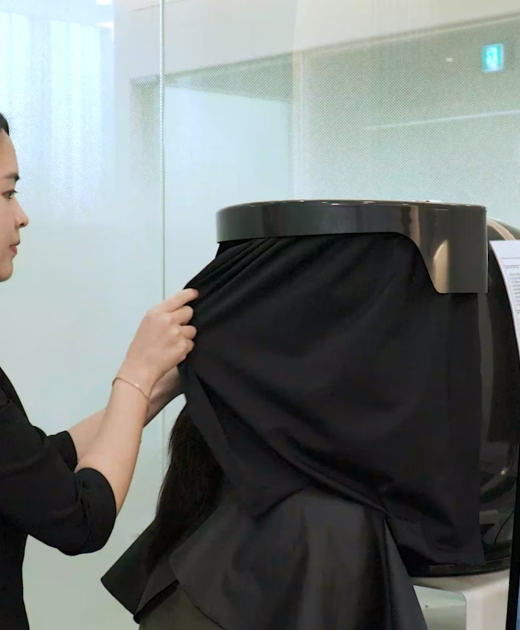
MARK-VU photographs the face under several lighting modes. The manufacturer, PSI Plus, lists normal, specular, polarized and ultraviolet light. The modes show the face under different lighting conditions; they do not turn a photograph into a medical diagnosis.
In a published MARK-VU study, participants removed makeup before an operator photographed them with outside light blocked. This describes the study's measurement method, not a trial of the effect of different cosmetics or a universal AP865 protocol. It supports a practical distinction: a photo meant to document your skin and a photo meant to show how your makeup looks are different pictures.
Keep sun protection for the journey
A separate study using a UV-sensitive camera showed that sunscreen changed how covered areas appeared in UV images. That was not a MARK-VU test, so it does not establish how a particular sunscreen will affect any MARK-VU score. It is a reason to tell the operator what you applied rather than assuming sunscreen is invisible to every lighting mode.
The American Academy of Dermatology recommends applying sunscreen before going outdoors. You do not have to give up sun protection to prepare for an indoor image: ask whether the clinic wants sunscreen or tinted products removed once you arrive, and confirm what to reapply before you leave.
What to tell the team before cleansing
Removing makeup may help when the physician wants a baseline image and you can clean your face comfortably. If your skin is irritated or you are following aftercare from a recent procedure, tell the clinic before washing or rubbing the area. Ask whether to adapt or defer the photo rather than changing your aftercare to fit an appointment.
A 2026 skin-imaging study using a different camera standardized cleansing and included an indoor rest period. That example explains why research teams control preparation; it does not establish a waiting time for MARK-VU. The cited sources do not tell us which cleanser, preparation interval or staff support AP865 uses at a particular visit. Confirm those details ahead of time.
A baseline photo is not a treatment decision
A phone photo can show the concern you noticed at home. A clinic image taken under consistent conditions may offer a more comparable reference at a later visit. Neither can tell you whether a change is clinically meaningful by itself. If images will be compared later, ask what will be kept consistent, such as lighting, angle and what is on the skin.
The scan described here is photography, not a laser or injectable treatment, so there is no treatment recovery schedule to plan from the photograph itself. If a procedure is being discussed separately, ask the physician about its expected recovery, common reactions, less common serious risks and whether it should be staged around your trip. Do not use a scan score as clearance for treatment.
Ask AP865 before your visit
AP865 lists MARK-VU for skin analysis. That listing confirms the scope, not whether imaging is part of every visit or how a particular appointment is prepared. In a private consultation, start with the concern you want assessed and ask whether a photo would add anything to the physician's in-person assessment.
If a photo would help, ask what to remove and where, what records or prior photos are useful, and who can access any images that are saved. Confirm how image consent is handled and whether a repeat photo would help answer the same question at follow-up.
COMMON QUESTIONS
Before you book
Can I wear sunscreen on my way to a MARK-VU scan?
Keep sun protection for travel. Ask the clinic whether to remove sunscreen indoors for the photo, and what to reapply before going outdoors again.
What if I arrive wearing foundation?
Tell the team what is on your skin and ask where and how they want you to remove it. Do not assume the clinic provides a cleanser that suits your skin.
Is there a fixed wait after washing my face?
The cited studies use different imaging methods and do not establish a universal waiting time for MARK-VU. Ask the clinic what preparation it uses for the comparison it plans to make.
Can I have a scan while my skin is recovering?
Tell the treating team when and where you were treated before cleansing or taking new images. Ask whether the photo can wait and follow the aftercare for the actual procedure.
SOURCES & FURTHER READING
Check the original information
- AP865 — official current program overview (MARK-VU listing)
- PSI Plus — official MARK-VU product information
- Park et al. — MARK-VU research methods, including makeup removal (2021), section 2.3
- PLOS ONE — measured appearance of sunscreen on UV photography (2017)
- Cosmetics — standardized preparation for imaging with a different camera (2026)
- American Academy of Dermatology — applying sunscreen before going outdoors
Published November 25, 2026 · Last reviewed for factual accuracy November 25, 2026. Product availability, regulation and treatment protocols can change.