AT A GLANCE
- System
- Two-dimensional facial imaging with four light sources
- Useful role
- Structured observation, discussion and longitudinal records
- Does not replace
- History, examination, diagnosis, consent or physician judgment
- Reviewed
- 13 October 2026
The short answer: a scan can inform the conversation, not make the decision
No. A MARK-VU scan can create structured two-dimensional images under four light sources, but it cannot choose a safe treatment by itself. Its useful role is to make observations easier to discuss and to preserve a record that a physician interprets alongside your history, an in-person examination and the change you actually want.
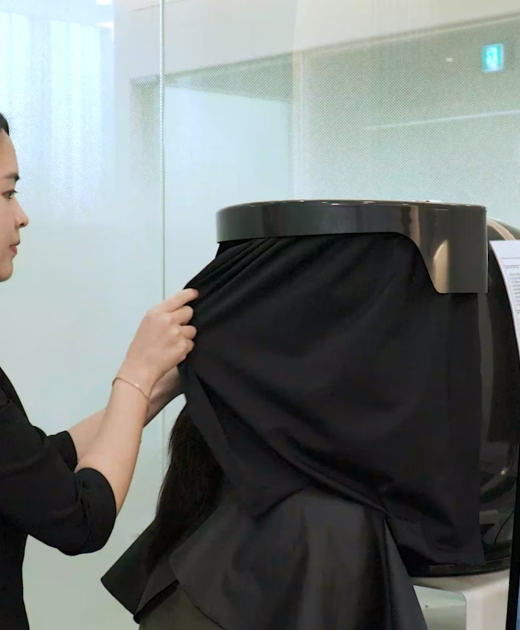
AP865 lists MARK-VU in its current diagnostic and support program. The manufacturer, PSI Plus, describes a professional two-dimensional skin visualizer using normal, specular, polarized and ultraviolet light. That describes how images are captured; it does not establish that software can diagnose every skin concern or issue an individual treatment plan.
A considered consultation may use the scan, decide that ordinary clinical photography is enough, request another form of assessment or recommend no procedure. The tool should support judgment rather than pressure the visit toward more intervention.
What four-light imaging can add
Different light modes can make different surface patterns easier to observe. PSI Plus says MARK-VU uses normal, specular, polarized and ultraviolet light and is designed to support observation of multiple skin concerns. The manufacturer also presents before-and-after comparison functions and a virtual laser simulation.
Those functions can be useful for orientation: they may help the patient and physician point to the same area, document a baseline and return to the same question later. A simulation is still a visualization, not a prediction of how one person's skin will respond.
For a private concierge visit, the strongest use is often quieter than a dramatic score. It is a shared reference for discussing what is visible, what remains uncertain, what should be examined directly and which concern matters most to the person in front of the physician.
Why standardization matters more than a single score
A 2024 review of computer-assisted full-face imaging found that these systems can support quantitative evaluation and follow-up, while environmental conditions, posture and incorrect operation can materially change results. The authors also noted that manual observation may still be needed and that users must understand the imaging principles and limits.
Procedural dermatology literature makes a similar point: photographs are more useful for comparison when the studio, camera, photographer, patient position and framing are standardized. A validated image-analysis study also found that performance varied by the facial feature being measured, reinforcing that one automated number should not be treated as equally reliable for every concern.
If follow-up imaging is planned, ask whether lighting, camera position, facial expression and preparation will be repeated. A changed score under changed capture conditions may reflect the photograph as much as the skin.
What a MARK-VU image cannot establish on its own
A facial image cannot by itself take a medical history, palpate tissue, distinguish every cause of redness or pigment, identify the depth of a structural concern, rule out contraindications or confirm that an energy device, injectable or skin-care procedure is appropriate.
It also cannot guarantee that a treatment will create the simulated appearance. Skin response depends on the actual concern, anatomy, skin tone and condition, previous procedures, device or product, settings or technique, aftercare and individual healing.
Persistent irritation, a changing lesion, pain, infection or another medical concern needs appropriate clinical assessment rather than a cosmetic image score. This guide is educational and does not diagnose a condition or recommend an individual treatment.
Privacy belongs inside the imaging conversation
A clear facial photograph is personal information. Before imaging, it is reasonable to ask what will be captured, why it is needed, who can access it, how long it is retained and whether it is used only for your care or also for teaching or marketing.
Consent to clinical documentation should not be treated as automatic consent to public before-and-after use. If you want a copy for continuity with another clinician, ask whether a secure export is available and whether the image will include an identifying label.
Privacy is not an extra amenity added after the scan. It is part of a high-end clinical experience: the purpose is explained, only useful information is gathered and the patient retains room to ask questions before an identifiable image is made.
How AP865 can use imaging without letting the device lead
Start with the change you notice and what you want to preserve. A physician can then decide whether MARK-VU imaging adds useful information, interpret the images with the physical examination and explain which observations are relevant to the proposed plan.
The next step may be treatment, a staged sequence, supportive skin care, a period of observation or referral for another assessment. More detected features do not mean more procedures are needed, and every highlighted area does not require correction.
For repeat visitors, consistent records can support continuity: the team can compare like with like, revisit the original goal and decide whether the plan should continue, pause or change. That is more valuable than turning one scan into a shopping list.
Questions to ask before facial skin imaging
Ask which question the scan is intended to answer, which image modes will be used and which findings still require direct examination. Ask how capture conditions are standardized if images will be compared later.
Ask the physician to separate observation from diagnosis and simulation from expected outcome. If a procedure is proposed, request the clinical reason, alternatives, important risks, expected recovery and follow-up plan rather than accepting a software score as the reason to proceed.
Finally, ask how images are stored, who can access them and whether any secondary use requires separate consent. A useful scan should leave you better informed—not hurried toward a decision.
COMMON QUESTIONS
Before you book
Can MARK-VU diagnose a skin condition?
Not by itself. MARK-VU is a two-dimensional visualizer that can support observation and documentation. Diagnosis and treatment suitability still require the person's history, an appropriate clinical examination and physician judgment.
Why does MARK-VU use four light sources?
PSI Plus lists normal, specular, polarized and ultraviolet light. Different capture modes can make different visual patterns easier to observe, but the meaning of those images depends on standardized technique and clinical interpretation.
Can a MARK-VU simulation predict my result?
No. A simulation can help discuss a visual idea, but it cannot predict individual response, recovery or outcome. The actual plan and its limits should be explained by the treating physician.
Is repeat skin imaging useful?
It can be useful when lighting, position, expression and other capture conditions are repeated and the images are interpreted in context. A changed score under changed conditions should not be assumed to prove a treatment effect.
What privacy questions should I ask before a skin scan?
Ask what is captured, why it is needed, who can access it, how long it is retained, whether you can receive a secure copy and whether teaching or marketing use requires separate consent.
SOURCES & FURTHER READING
Check the original information
- AP865 — official current program overview
- PSI Plus — official MARK-VU product information
- PubMed — 2024 review of computer-assisted full-face skin imaging systems
- PubMed — standardized photography methods in procedural dermatology
- PubMed — validation study of facial skin-aging image analysis
Published October 13, 2026 · Last reviewed for factual accuracy October 16, 2026. Product availability, regulation and treatment protocols can change.