AT A GLANCE
- Shared platform
- 2.45 GHz microwave energy
- Submental planning
- Pocket or Shallow handpiece context
- Body planning
- Shallow or Deep handpiece context
- Reviewed
- 27 October 2026
The short answer: the platform may be shared, but the plan is not
ONDA is not one identical protocol moved from the abdomen to the face. AP865's current program lists ONDA under both double-chin and body-line concerns, but the manufacturer assigns different handpieces to submental firming, skin laxity, cellulite, localized adiposity and larger body areas.
For the face, the medically relevant ONDA discussion is usually a precisely mapped submental or lower-face concern—not a blanket promise to slim the whole face. For the body, the discussion may involve a defined pocket of subcutaneous fat, cellulite or skin laxity. A physician should first identify the tissue and decide whether reducing volume would actually support the person's goal.
The right consultation question is therefore not simply, 'Can ONDA be used here?' It is, 'Which tissue is being targeted, with which model and handpiece, and why is that appropriate for this exact area?'
What the actual ONDA platform and handpieces change
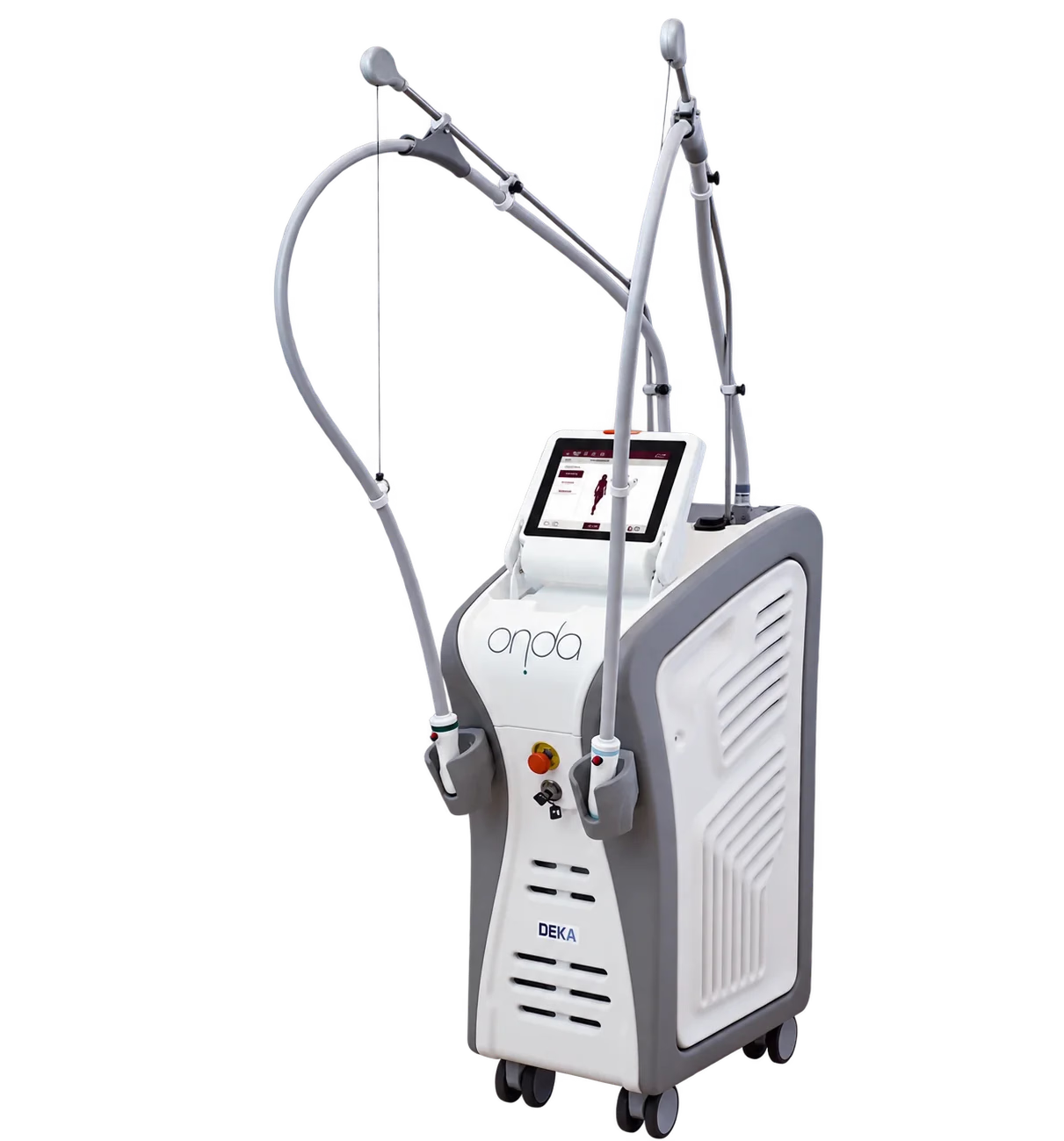
DEKA describes ONDA and ONDA PRO as 2.45 GHz microwave platforms. Its current product pages distinguish Deep and Shallow handpieces, while ONDA PRO adds a smaller Pocket handpiece. The listed uses differ: Pocket is described for lifting, firming and submental work; Shallow for cellulite, tightening and localized adiposity; and Deep for localized adiposity in larger areas.
Those labels do not choose a setting for an individual. The 2024 expert review emphasizes physician judgment, conservative starting parameters, treatment-area size, tissue thickness, movement and continuous monitoring of heat and comfort. Local labeling and the exact installed model also matter because the manufacturer notes that configurations and intended uses vary by market.
Ask to see the exact handpiece before treatment and keep its name in the treatment record. 'ONDA' alone does not document the depth strategy, target or map well enough for future continuity.
Face planning: define the submental target before reducing volume
A double chin can reflect localized pre-platysmal fat, lax skin, muscle or gland position, skeletal structure, weight change—or more than one factor. Microwave treatment cannot make those causes interchangeable. A visually soft jawline also does not automatically mean that facial fat should be reduced.
A 2022 prospective study followed 48 people treated for submental fat and laxity with six sessions two weeks apart. A separate 2025 pilot study included ten women who received two sessions 30 days apart with the Pocket handpiece. Both reported changes after a treatment course, but neither establishes one universal schedule or proves what a single visit will do for an individual.
A careful facial plan should mark the intended submental boundaries, explain which nearby structures will be avoided and consider whether the lower face is already thin or volume-depleted. Observation, another treatment category or no treatment may be more coherent than pursuing a device name.
- What finding is being targeted: localized fat, laxity or both?
- Is the proposed area strictly submental, or does it extend elsewhere?
- Which model and handpiece will be used, and why?
- Could reducing volume make an already thin lower face look less supported?
Body planning: a defined contour concern is not general weight loss
Body protocols address a different scale and tissue map. Manufacturer information places Deep and Shallow handpieces in discussions of localized adiposity, cellulite and skin laxity, and the 2024 review describes area-specific positioning, movement and monitoring rather than one setting copied across the body.
A 2023 study enrolled 19 healthy adults with visible abdominal fat and used three sessions four weeks apart. It excluded people with obesity, diffuse body-fat distribution or irreversible skin laxity. The small selected cohort cannot turn ONDA into a treatment for general weight loss or predict results in every body type.
The body assessment should document the exact area, tissue thickness, skin quality, previous surgery or scarring and whether the concern is localized enough for the proposed map. Treating a larger surface or adding multiple zones is not automatically a better plan; it changes treatment time, heat monitoring, recovery and the ability to assess what caused a response.
Face and body evidence cannot be converted into one schedule
The reviewed submental and abdominal studies used different participants, handpieces, areas, session counts and outcome measures. There was no face-versus-body randomized comparison that could identify a universally superior schedule. A session count borrowed from an abdominal study is not evidence for the lower face, and a submental pilot is not a body protocol.
The 2024 advisory-board review is useful for selection and technique, but it is based partly on experienced-user recommendations and explicitly says long-term efficacy and safety data were still limited. Marketing phrases such as 'three in one' should therefore be translated into a specific tissue target and an honest evidence boundary.
For an international visitor, a plan should explain what can reasonably be assessed during the Seoul stay and what requires later review. A longer course should not be compressed merely to fit an itinerary.
Recovery and risks depend on area, technique and monitoring
The 2024 review describes possible temporary reactions including redness, swelling, warmth, tenderness, itching, numbness, firmness and bruising. It also notes that burns, blisters or nodules can occur, particularly when patient evaluation, pressure, movement, heat monitoring or parameters are inappropriate. Noninvasive does not mean free of risk.
Report excessive heat or pain during treatment immediately. Afterward, worsening pain, a burn or blister, spreading redness, a firm or enlarging nodule, unusual color change, weakness, numbness that persists or another rapidly worsening symptom needs prompt clinical assessment rather than a routine remote check-in.
Tell the physician about implanted electronic devices, altered sensation, active skin problems in the proposed area, relevant illness, medicines, previous surgery and every recent procedure by name, date and location. The treating clinician should use the current device instructions and local labeling rather than a public guide to make an individual decision.
How AP865 can make the plan private, traceable and continuous
A private AP865 consultation should begin with the visitor's goal, examination, treatment history and travel responsibilities—not with pressure to repeat the same protocol across several areas. The physician can then explain whether the concern is fat, laxity, cellulite, another structural issue or a reason not to treat.
A high-quality record should name the ONDA model, handpiece, mapped area, date, expected response, personal aftercare, warning signs and contact route. If both face and body concerns are discussed, each should have its own rationale rather than being bundled into one generic device session.
Continuity matters after the appointment. Agree on when photographs or an in-person review would be meaningful, who will answer an unexpected symptom and which information should travel with the patient if care is needed after leaving Korea.
COMMON QUESTIONS
Before you book
Is ONDA the same treatment for the face and body?
No. The platform family uses 2.45 GHz microwave energy, but the tissue target, handpiece, area, parameters and evidence differ. A submental plan should not be copied from an abdominal or body protocol.
Can ONDA be used over the whole face?
The current manufacturer pages describe the Pocket and Shallow handpieces for precise firming, tightening and submental work; they do not justify a universal whole-face plan. The exact area and local labeling need physician review.
How many ONDA sessions are needed?
There is no universal number. Reviewed submental studies used six sessions two weeks apart or two sessions 30 days apart, while one abdominal study used three sessions four weeks apart. Those research schedules are not personal prescriptions.
Can face and body ONDA be done on the same day?
Not automatically. Multiple areas change treatment time, heat monitoring, total tissue exposure, recovery and follow-up. A physician should decide whether staging is safer and easier to evaluate than doing more in one visit.
Is ONDA a weight-loss treatment?
The current evidence and manufacturer information describe localized contouring concerns, not general weight loss. One small abdominal study excluded obesity and diffuse fat distribution, so it should not be generalized beyond its selected participants.
SOURCES & FURTHER READING
Check the original information
- AP865 — official current program overview
- DEKA — official ONDA handpiece and 2.45 GHz information
- DEKA — official ONDA PRO Pocket, Shallow and Deep handpieces
- PubMed — 2024 ONDA advisory-board review, safety and evidence limits
- PubMed — 2022 prospective study of submental fat and laxity
- PubMed — 2025 submental-laxity pilot study
- PubMed — 2023 study of localized abdominal adiposity
Published October 27, 2026 · Last reviewed for factual accuracy October 27, 2026. Product availability, regulation and treatment protocols can change.