

AT A GLANCE
- Flight interval
- The current US instructions do not state an Ultherapy-specific no-fly period
- Common recovery
- Redness may settle within hours; mild swelling is listed as typically resolving within 3–72 hours
- Follow-up matters
- Tenderness, bruising or transient nerve effects can last longer and should be reviewed before departure if present
- Reviewed
- 19 October 2026
The short answer: there is no published Ultherapy no-fly rule
The current US Instructions for Use for Ultherapy Prime do not state an Ultherapy-specific waiting period before air travel. That is a limit of the document, not proof that every person is ready to leave Seoul immediately after treatment.
The same instructions describe redness, swelling, welting, tenderness, bruising and transient nerve effects with different possible timelines. A person who feels well and has only an expected mild reaction is not in the same situation as someone with worsening pain, marked asymmetry, weakness, numbness, a burn or a vision or speech change.
A considered travel plan therefore answers a clinical question and a continuity question: is the current reaction appropriate for travel, and who can examine the person if it changes after departure? The treating physician should decide that after reviewing the area, technique, symptoms, health history and itinerary.
What the official documents establish
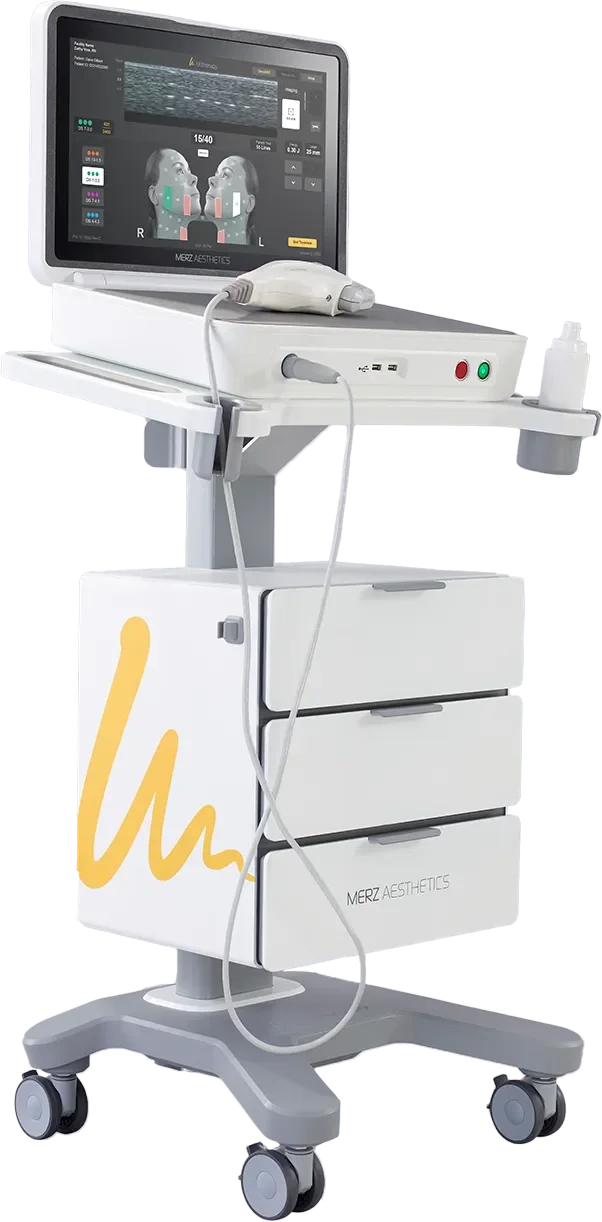
Ultherapy Prime is the current control-unit model named in FDA 510(k) K250418. The cleared facial indications include non-invasive lifting of the eyebrow and lax submental and neck tissue. FDA clearance describes authorized use; it does not set an airline timetable or guarantee an individual result.
The manufacturer's instructions explain that DeepSEE ultrasound visualization is used to see dermal and subdermal tissue, confirm coupling and help select an appropriate treatment depth. They also identify areas to avoid and technique-related risks. Those details make treatment mapping and operator judgment more relevant than a generic promise of no downtime.
AP865's current official program lists Ultherapy Prime and describes ultrasound visualization as part of its lifting approach. The official clinic site announces a November grand opening and says reservations are being accepted, so visitors should confirm the operating date, device availability and consultation schedule for their travel dates.
Normal activity is not the same as flight clearance
Ultherapy is non-invasive, and many people may be able to continue ordinary activities. Commercial air travel adds a fixed departure time, a long period away from the treating clinic and sometimes limited access to an appropriate examination after landing. Those practical differences matter even when cabin pressure itself is not named in the device instructions.
The CDC Yellow Book reports broad advice to wait 7–10 days after laser treatments or cosmetic procedures to the face, eyelids or nose. Its cited wording does not identify Ultherapy or establish an Ultherapy-specific interval, so it should not be converted into either a mandatory device rule or permission to ignore follow-up.
No source identified for this guide compares same-day, next-day and later flights after Ultherapy Prime. A universal interval would therefore be invented rather than evidence-based. The physician may advise observation, a later flight, a smaller plan, postponement or no treatment after reviewing the individual visit.
Expected recovery may outlast the appointment
For brow, under-chin and neck treatment, the current instructions say redness typically resolves within a few hours and mild swelling within 3–72 hours. Welting may take up to a week, while tenderness or bruising may last from days to two weeks. These are manufacturer-reported ranges, not a personal recovery schedule.
The instructions also describe transient local muscle weakness, numbness, pain, tingling or altered sensation that may take two to six weeks to resolve. A 2025 systematic review of 42 MFU-V studies found that commonly reported events included redness, swelling, bruising and tenderness and were generally mild to moderate; the authors also noted limits in the evidence base.
A traveler should not assume that an expected reaction will be invisible by boarding time or finished after landing. Place the treatment early enough in the itinerary to observe the initial response, ask questions and obtain an examination if recovery does not follow the expected course.
Symptoms that should change the departure plan
Contact the treating clinic promptly for a burn, blister, increasing or severe pain, marked or worsening swelling, new weakness, significant asymmetry, persistent numbness, a new rash or another reaction that was not explained in the personal aftercare plan. Vision change, speech difficulty or another potentially serious neurological symptom needs urgent in-person medical assessment rather than travel advice from an article.
Post-market reports listed in the instructions include burns or blisters, nodules, pigment change, scarring, volume change, numbness, weakness, speech difficulty and vision change. These reports come from an uncertain population, so their frequency and causal relationship cannot always be estimated, but the warning list should still shape consent and follow-up.
Do not board simply to preserve an itinerary when a symptom needs assessment. The practical question is not whether most people travel uneventfully; it is whether this person's current condition has been reviewed and whether care remains accessible during and after the journey.
Who should not rely on generic travel advice
The current instructions list open wounds or lesions, severe or cystic acne in the treatment area, active implants such as pacemakers or defibrillators, and metallic implants in the treatment area among the contraindications. They also describe precautions for dermal fillers, anticoagulant treatment and several populations or health conditions.
Previous filler, facial surgery, energy treatment, nerve symptoms, implanted devices, medicines and relevant medical history should be disclosed before treatment. A pre-arrival message or photograph cannot replace the in-person assessment needed to confirm the treatment area and current condition.
If records are incomplete, the skin or anatomy has changed, or the itinerary leaves no realistic follow-up window, waiting can be the more considered decision. A private concierge experience should preserve that option rather than use the flight date to force a procedure into the schedule.
Leave with a treatment record and a follow-up route
Ask for a written record that names the device, treatment date, treated zones, transducers or depths used when appropriate, relevant settings or line information, expected reactions, personal aftercare and clinic contact. Keep it available during travel rather than only inside a message thread that may be hard to retrieve.
Confirm who will review a routine question after you leave Korea, what photographs or video may be useful, and which symptoms need local in-person or urgent assessment. Remote follow-up can help exchange information, but it cannot examine every unexpected reaction safely.
If another device or injectable is being considered during the same trip, ask why the sequence is appropriate and whether it leaves enough time to distinguish one recovery pattern from another. Several available treatments do not create a medical reason to combine them in one visit.
How AP865 can plan care around an international itinerary
AP865's Private Skin & Aging Care Concierge direction fits this decision when the consultation starts with the person's concern, previous treatment history, anatomy and travel responsibilities rather than a preset treatment bundle. The physician can decide whether Ultherapy Prime belongs in the plan and which zones should be treated or left alone.
For an international visitor, privacy and continuity should be visible in the plan: enough time for an unhurried assessment, a treatment map that can be explained, realistic observation in Seoul, written records and a clear route for later review. The clinic should know the flight schedule before treatment, not after a symptom appears.
The goal is not to promise a departure date. It is to create a plan that still makes sense if the physician recommends less treatment, more observation, another evaluation or postponement.
Questions to settle before booking Ultherapy near a flight
Ask whether the current concern and treatment area match the device's cleared use, what the ultrasound image is expected to clarify, which zones will be avoided and what previous procedures or medical details could change the plan.
Ask which reactions are expected for the proposed area, how long the physician wants you available for local observation, and which symptoms would delay travel or require urgent assessment. Confirm the follow-up contact and what care can and cannot be provided remotely.
Finally, confirm that the appointment can become consultation-only if the examination or itinerary does not support treatment. A high-end plan should protect a safe decision even when that decision is to wait.
COMMON QUESTIONS
Before you book
Does Ultherapy Prime have an official no-fly interval?
The current US Instructions for Use do not state an Ultherapy-specific waiting period before air travel. That absence is not individual clearance; symptoms, treatment area, medical history, observation and access to follow-up can change the physician's advice.
How long can swelling last after Ultherapy Prime?
For brow, under-chin and neck treatment, the instructions say mild swelling typically resolves within 3–72 hours. Other reactions such as tenderness, bruising, welting or transient nerve effects can last longer, and personal recovery may differ.
Does no downtime mean I can take a same-day flight?
No. Ability to continue ordinary activity is not the same as a physician confirming that same-day travel is appropriate. A flight reduces access to the treating clinic and may leave little time to observe an unexpected reaction.
What symptoms should be checked before flying?
A burn or blister, worsening or severe pain, marked swelling, new weakness, significant asymmetry, persistent numbness, rash or another unexpected reaction should be discussed promptly. Vision or speech change or another potentially serious neurological symptom needs urgent in-person assessment.
What record should I take home after treatment?
Keep the device name, treatment date, treated zones, transducers or depths used when appropriate, relevant settings or line information, expected reactions, personal aftercare and clinic contact. Also confirm which concerns need local in-person or urgent care after departure.
SOURCES & FURTHER READING
Check the original information
- AP865 — official current program overview
- AP865 — official opening and reservation status
- Ultherapy — current US Instructions for Use for Ultherapy Prime
- US FDA — Ulthera System PRIME Model 2.1 510(k) K250418
- PubMed — 2025 systematic review and meta-analysis of MFU-V effectiveness and safety
- CDC Yellow Book — medical tourism and travel-associated recovery risks
Published October 19, 2026 · Last reviewed for factual accuracy October 20, 2026. Product availability, regulation and treatment protocols can change.