
AT A GLANCE
- Makeup rule
- No universal manufacturer-published interval
- Normal activity
- Most patients return immediately after treatment
- Expected reaction
- Temporary redness or swelling can occur
- Decision point
- Intact skin, expected symptoms and personal instructions
The short answer: normal activity is not a makeup guarantee
The current Thermage FLX manufacturer information says most patients return to regular activities immediately after treatment. It does not publish a separate number of hours before foundation, concealer or eye makeup, so there is no evidence-based universal countdown to copy into every itinerary.
If the treated surface is intact, comfortable and following the expected recovery pattern, the treating clinician may allow familiar makeup. If the area is unusually hot, painful, swollen, blistered, crusted, numb or changing in color, wait and contact the clinic. Cosmetics should not be used to hide a reaction that needs examination.
AP865’s current official program lists Thermage FLX. That confirms the scope of consultation, not automatic suitability or same-day makeup clearance. A physician should review the treated zones and immediate response, then give instructions for the actual treatment before an international visitor leaves.
Why an intact-skin treatment still needs a surface check
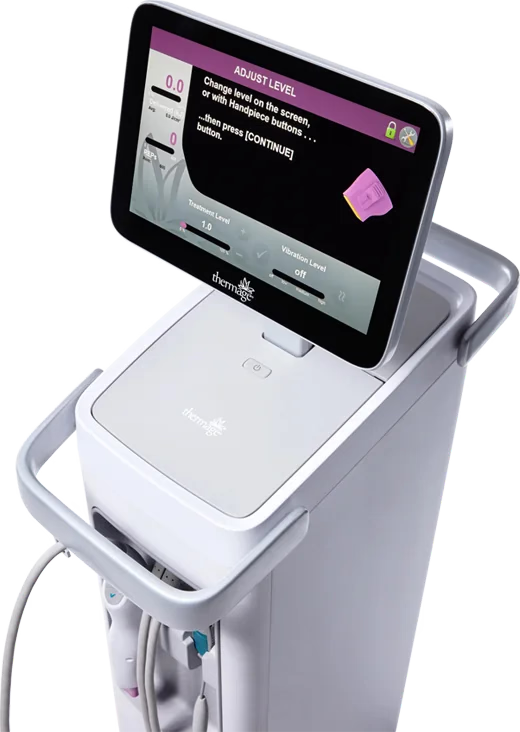
The US FDA 510(k) summary describes Thermage FLX as a 6.78 MHz radiofrequency system that delivers energy through a treatment tip while conductively cooling the epidermis. The system monitors skin contact and uses radiofrequency tuning across tissue impedance during treatment.
Thermage FLX is noninvasive and does not intentionally puncture or remove the skin surface. That helps explain the manufacturer’s immediate-return-to-activity language, but it does not prove that every treated area will look or feel unchanged or that every cosmetic will be comfortable afterward.
Treatment zone, tip, pulse pattern, energy, passes, baseline sensitivity and clinician technique can change the response. Eye-area treatment also needs zone-specific instructions. The platform name alone cannot determine when rubbing, cleansing or product application is appropriate.
What the recovery evidence can—and cannot—answer
Current manufacturer safety information says mild redness typically resolves within 24 hours. Swelling may occur and typically resolves within five days, although it can remain longer. Earlier clinical studies of nonablative monopolar radiofrequency also describe immediate redness and swelling, with recovery varying by protocol and person.
Those sources support a low-downtime description; they are not makeup trials. They did not randomize people to different products or application times, and older Thermage studies do not establish a current FLX reaction rate. A normal-activity statement should therefore not be rewritten as a guarantee that cosmetics are always comfortable immediately.
The defensible conclusion is narrower: elapsed time is only one part of the decision. What the surface looks and feels like, which zone was treated, whether another procedure was added and what the treating clinician observed should take priority.
When makeup may be reasonable—and when to pause
Once the clinician says cosmetics may return and the skin is intact and comfortable, use products you already tolerate and apply them without vigorous rubbing. Clean hands and clean applicators reduce avoidable contact, but they do not turn a product into a medical aftercare treatment.
Stop if application causes persistent burning, itching, pain or increasing swelling. Labels such as gentle, mineral or hypoallergenic do not guarantee tolerance. Ask which cleanser, moisturizer, sunscreen and active skincare belong in the first-day plan rather than adding several unfamiliar products during travel.
If a broadcast, wedding, photo session or professional makeup application is important, tell the clinic before treatment. A larger observation window, a simpler plan or consultation only may be more reliable than assuming visible redness can always be covered.
- More reasonable to discuss: intact skin, mild or settling symptoms and clear clinician permission.
- Pause and ask: persistent heat, increasing tenderness, marked swelling or product stinging.
- Do not cover: a burn-like area, blister, scab, new surface irregularity or rapidly changing color.
- Use the treating clinic’s written instructions when they are more restrictive than general guidance.
Warning signs should be assessed, not concealed
Current manufacturer safety information lists infrequent adverse effects including burns with blistering or scabbing, possible scarring, surface irregularities, altered sensation, lumps or nodules and skin darkening. Mild-to-moderate pain during treatment is also described. Individual frequency cannot be inferred from a general safety list.
Contact the treating clinic promptly for a suspected burn or blister, severe or increasing pain, marked or progressive swelling, persistent altered sensation, new weakness, an unusual lump, a new contour change or another unexpected symptom. Severe or rapidly worsening symptoms need timely in-person assessment rather than an online makeup decision.
Remote photographs can help the clinic understand what changed, but lighting and cosmetics can obscure the surface. Do not apply foundation or concealer before documenting and reporting a reaction that may need examination.
A combined appointment follows the more restrictive plan
A makeup answer for Thermage FLX alone does not transfer to an appointment that also includes microneedling, a laser, peel, injectable or another energy procedure. Each step can introduce different surface, bruising and product-tolerance considerations.
If procedures are combined or closely sequenced, ask the physician which intervention determines aftercare and follow the more restrictive instruction. Several available technologies do not create a reason to perform them all at once, especially when a short trip leaves little time to observe each response.
Staging care can make recovery easier to interpret and preserves the option to stop. For an international visitor, that continuity may be more useful than compressing a plan around an event or departure time.
What an AP865 continuity record should include
A useful record should name Thermage FLX, the treatment date and zones, the tip, pulse count and settings when appropriate, expected reactions, personal skincare and makeup instructions and the clinic’s contact route.
The physician should explain which changes are expected, which justify a message and which require in-person or urgent care. That is more useful than a generic no-downtime label because it connects the advice to the actual treatment map and observed response.
AP865’s Private Skin & Aging Care Concierge approach should also account for privacy, travel timing and continuity after Korea. Remote follow-up can support records and communication, but it cannot replace physical examination when a reaction is severe, unexpected or worsening.
COMMON QUESTIONS
Before you book
How soon can I wear makeup after Thermage FLX?
Current manufacturer information does not set a makeup-specific interval. It says most patients return to regular activities immediately. Makeup may be reasonable after the clinician confirms that the surface is intact and the response is expected, but personal aftercare takes priority.
Does normal activity mean makeup is always safe immediately?
No. Normal-activity guidance is not a makeup trial or a guarantee for every product and treated zone. Skin response, eye-area treatment, added procedures and the clinician’s instructions can change the plan.
Should I cover redness after Thermage FLX?
Mild redness may occur and typically resolves within 24 hours, but do not conceal a burn-like area, blister, scab, severe pain, marked swelling, new surface irregularity, altered sensation or rapidly changing color. Contact the treating clinic for assessment.
What if Thermage FLX is combined with another treatment?
Follow the more restrictive recovery plan. Microneedling, lasers, peels, injectables and other energy treatments can change surface recovery, bruising and product tolerance. The physician should explain the sequence and which procedure determines aftercare.
What should my written aftercare record say?
It should identify the device, date, treated zones, tip, pulse count and settings when appropriate, expected reactions, when skincare and makeup may return, and the contact route for routine, in-person and urgent follow-up.
SOURCES & FURTHER READING
Check the original information
- AP865 — official current program overview
- Thermage — current FLX recovery guidance and safety information
- US FDA — Thermage FLX 510(k) summary K170758
- PubMed — clinical review of Thermage and monopolar RF downtime
- PubMed — multipass monopolar RF study with immediate erythema and edema
- PubMed — retrospective review of adverse reactions after nonablative RF
Published November 22, 2026 · Last reviewed for factual accuracy November 22, 2026. Product availability, regulation and treatment protocols can change.