AT A GLANCE
- Platform
- Soprano Titanium · diode laser
- Wavelengths
- 755 + 810 + 1064 nm
- Evidence
- One preliminary 28-person rejuvenation study
- Trip rule
- Do not use an event date as a safety deadline
The short answer: three names need separating
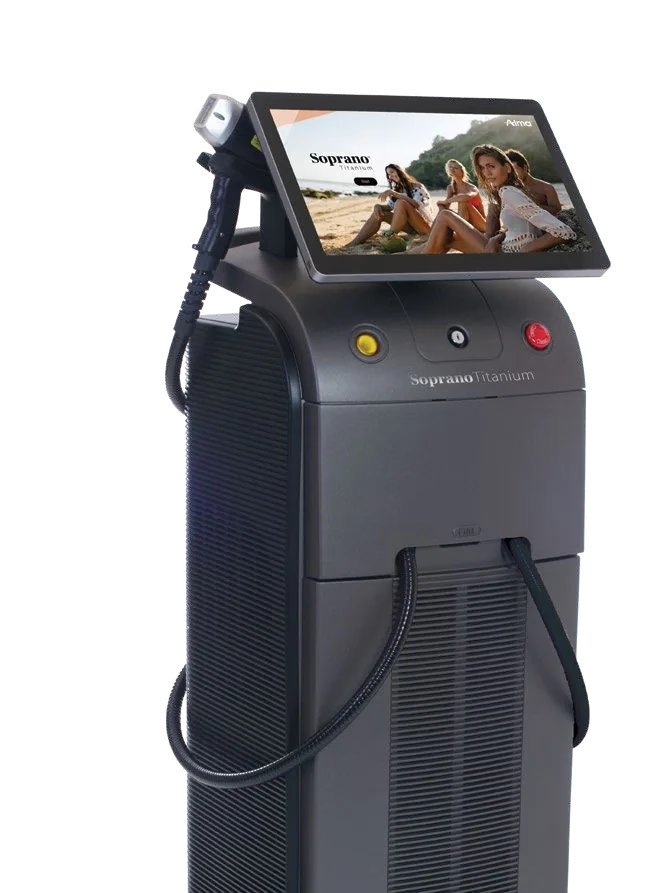
Titanium, Soprano Titanium and Titanium with Hyper can be used as though they mean one standardized treatment, but they do not automatically describe the same protocol. The actual device pictured on AP865 CLINIC's treatment page is the Soprano Titanium platform. AP865 CLINIC uses ‘Titanium with Hyper’ for its current facial-line, tightening and tone program, while the September event names an 80 kJ package.
That 80 kJ figure is a recorded energy label, not a universal dose, depth measurement or result score. A meaningful plan also needs the exact applicator, mode, treated area, passes, contact and cooling, skin type, temperature monitoring, endpoint and operator. More kilojoules do not automatically mean more lift or a better fit for every face.
For an autumn event, the useful question is therefore not ‘How strong is Hyper?’ It is ‘What exact device configuration and facial protocol are you proposing for my skin, why is it suitable, and what recovery uncertainty should I leave before the event?’
What the three wavelengths actually tell us
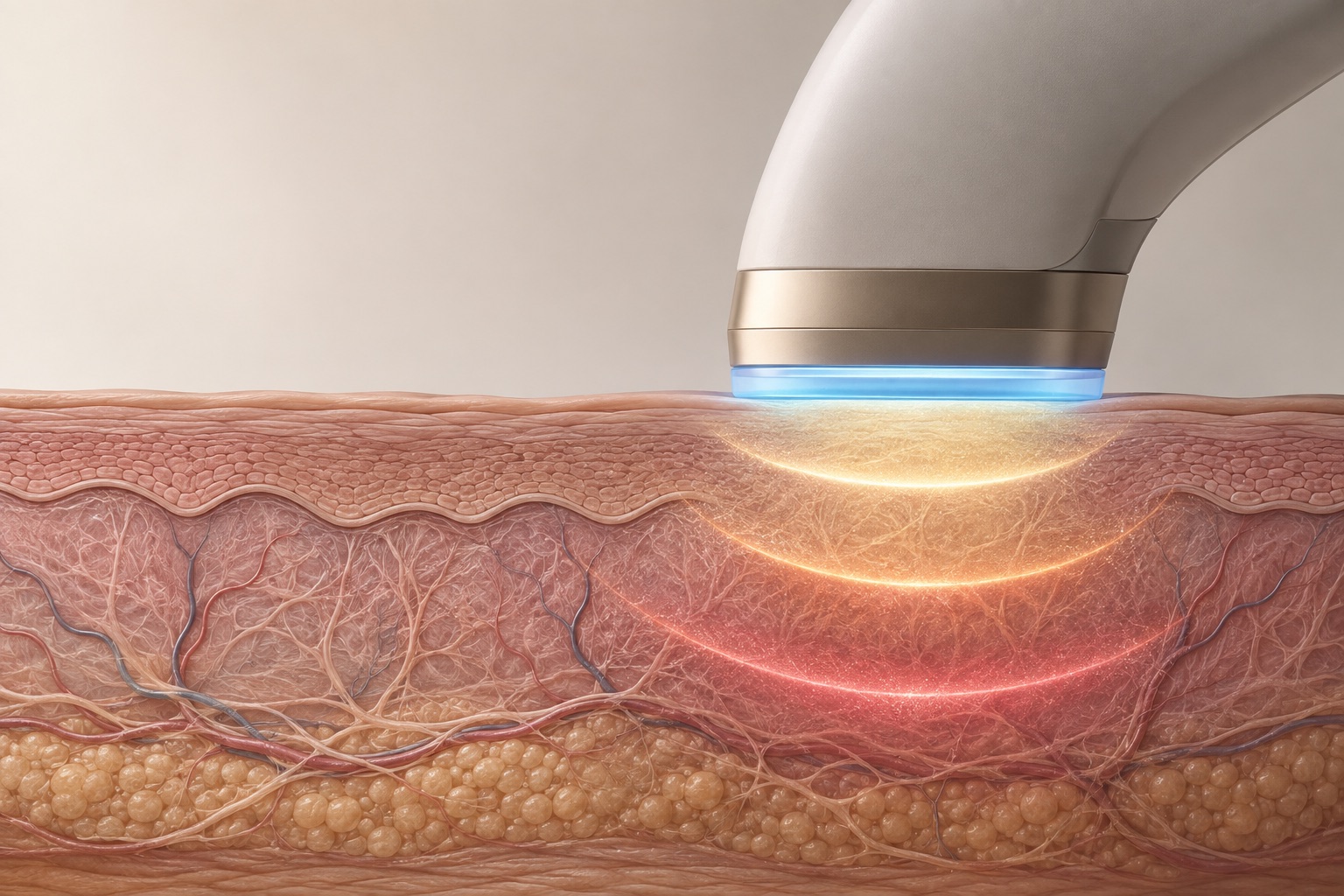
AP865 CLINIC describes the platform as a multi-wavelength laser using 755, 810 and 1064 nm. Alma's current Soprano Titanium materials confirm that these three diode-laser wavelengths can be emitted from one applicator and that contact cooling is part of the platform. Different wavelengths have different absorption and penetration profiles, but a wavelength number alone does not reveal the temperature achieved in a particular facial layer or predict a visible contour change.
There is another important label distinction. Alma's public global product materials primarily present Soprano Titanium and the larger Trio MAX applicator for hair removal. AP865 CLINIC presents a physician-planned facial tightening and tone use in Korea. Those statements are not interchangeable regulatory claims. Before treatment, ask the doctor to name the current Korean authorized indication, applicator and mode and explain whether the proposed facial use is within that local label.
A larger contact area can change coverage and treatment speed; it is not proof that energy reaches a specific anatomical plane more precisely. Avoid translating 2 cm², 4 cm², wavelength or kJ marketing language into a promised SMAS depth, fat reduction or surgical-style lift unless the exact device documentation and clinical plan support it.
What the rejuvenation evidence says—and does not say
The most directly relevant published study we found was a 2023 preliminary study of 28 women receiving a combined 755, 810 and 1064 nm laser for skin rejuvenation. Participants had five sessions at two-week intervals. Investigators reported clinical and histologic changes, while transient pain was the reported treatment-related problem and no serious adverse event was reported in that small group.
This is encouraging early evidence, but it is not a large independent comparison, it does not establish one best energy number, and it does not prove that one 80 kJ session immediately before an event will reproduce the study's results. Five scheduled sessions cannot be compressed into a single-visit promise, and a study average cannot predict one person's recovery or degree of change.
I would treat phrases such as immediate, painless, twice as powerful or twice as long-lasting as questions to verify, not outcomes to assume. Ask which published protocol is relevant to the plan being offered and which parts come from the clinic's own experience rather than controlled evidence.
Laser safety still matters when downtime sounds light
Non-ablative does not mean risk-free. Temporary warmth, redness, swelling, tenderness, tightness or discomfort can occur. Burns, blistering, crusting, post-inflammatory hyperpigmentation or hypopigmentation, infection, scarring, uneven response and eye injury are less common but important possibilities with laser or light procedures.
The American Academy of Dermatology advises avoiding tanning and telling the physician about skin-care products, medicines and supplements because some can increase light sensitivity. Darker or recently tanned skin can require particular expertise and conservative settings because melanin changes laser absorption and the risk of burns or dark marks. Autumn weather does not erase recent summer UV exposure.
Protective eyewear matched to the wavelengths is essential for everyone in the treatment room. Tell the clinic about active rash, infection or wounds; photosensitivity disorders; a history of cold sores or pigment change; previous laser reactions; pregnancy or breastfeeding; cancer or suspicious lesions in the area; and all prescription, over-the-counter and herbal products. The clinician should decide whether to treat, delay, modify or refer.
- Confirm the exact platform, applicator, mode, treated area, passes and recorded energy—not kJ alone.
- Disclose tanning, sunburn, pigment sensitivity, melasma and every recent facial procedure.
- Ask how skin temperature and visible endpoints are monitored and what stops the treatment early.
- Confirm wavelength-appropriate eye protection and the clinic's burn and pigment-change pathway.
- Keep an English treatment record and a contact route that works after you leave Korea.
How I would plan it before an autumn event
A first-time laser session should not be treated as a last-minute photo filter. Share your arrival date, event date, flight home, recent sun exposure and the amount of redness or swelling you could realistically accept. If your skin is irritated, newly tanned or recovering from another energy treatment, waiting may be the better plan.
There is no high-quality trial that establishes one ideal event interval for Titanium with Hyper. A cautious buffer should be individualized by the doctor after examining the skin and reviewing your history. If the only available slot leaves no time for reassessment, do not let an expiring promotion decide the medical timing.
Seek prompt clinical review for worsening pain, marked or spreading redness, blisters, crusting, unexpected darkening or lightening, eye pain or visual symptoms. For facial weakness, breathing difficulty, altered consciousness or another emergency symptom, use emergency services rather than waiting for a clinic message.

How to read AP865 CLINIC's September 80 kJ packages
The annual plan is also a membership bundle rather than a single-session tariff.
A combination package is not evidence that all components should be stacked in one visit.
The consultation checklist I would bring
A good consultation should translate every marketing noun into a clinical detail. Bring natural-light photographs, your medication list, recent treatment records and the dates of any important event or flight. Ask the clinician to mark the planned areas and explain which concern each pass is meant to address.
If the answers blur device clearance, hair-removal labeling, rejuvenation evidence and the clinic's own protocol into one claim, slow the decision down. The reasonable outcome may be one conservative session, a staged series, a different technology, skin care only or no treatment during this trip.
- What is the exact Korean product registration and authorized indication for my proposed facial use?
- Which 2 cm² or 4 cm² applicator and which operating mode will be used, and why?
- What does 80 kJ mean in this plan, and how is it distributed and documented?
- What evidence supports the goal we chose—tone, fine texture, tightness or contour?
- What should I expect at 24 hours, one week and later, and which signs need urgent review?
COMMON QUESTIONS
Before you book
What is Titanium with Hyper in Seoul?
AP865 CLINIC uses the name for a facial laser program on the Soprano Titanium platform using 755, 810 and 1064 nm wavelengths. The clinic should explain the exact applicator, mode, Korean authorized indication, area and energy plan before treatment.
Does 80 kJ mean the treatment reaches deeper?
Not by itself. Kilojoules record total energy, not anatomical depth, precision or expected lift. Applicator, mode, area, passes, cooling, tissue response and technique all affect the clinical plan.
Is Titanium with Hyper proven for skin tightening?
A preliminary study of 28 women reported changes after five triple-wavelength sessions, but it was small and does not establish one best protocol or guarantee a result from one visit. Manufacturer materials and local authorized indications should be discussed separately.
Can I have it just before a wedding or photo shoot?
Do not assume a last-minute session is invisible. Redness, warmth, swelling, discomfort or pigment change can occur, and there is no universal evidence-based event interval. Ask the doctor to plan a conservative buffer or postpone.
Is Hyper Titanium painless and risk-free?
No laser procedure is risk-free. Cooling may improve comfort, but pain, burns, blistering, pigment change, scarring, infection or eye injury remain possible. Skin type, tanning, medicines, settings, eye protection and operator experience matter.
SOURCES & FURTHER READING
Check the original information
- Alma — Soprano Titanium Special Edition product information
- Alma — Trio MAX 4 cm² applicator launch information
- PubMed — preliminary triple-wavelength skin-rejuvenation study
- American Academy of Dermatology — laser treatment and skin-type safety
- US FDA — general limits and risks of aesthetic devices
- AP865 CLINIC — official treatment program overview
Published September 4, 2026 · Last reviewed for factual accuracy September 4, 2026. Product availability, regulation and treatment protocols can change.