AT A GLANCE
- Flight interval
- No Potenza-specific no-fly period was identified in the current official materials reviewed
- Expected recovery
- Temporary redness, tingling and treatment-time burning are listed by the manufacturer; swelling is common in RF microneedling studies
- Device class
- RF microneedling with monopolar or bipolar delivery at 1 or 2 MHz, depending on the selected setup
- Reviewed
- 21 October 2026
The short answer: there is no Potenza-specific flight rule
The current Potenza manufacturer and US FDA materials reviewed for this guide do not state a Potenza-specific waiting period before air travel. That does not make a same-day flight automatically appropriate. The treatment is percutaneous, recovery varies with the tip, depth, RF mode, area, passes and individual skin response, and an unexpected reaction may need an in-person examination.
A practical departure decision should therefore be made after the treating physician sees the immediate response and explains what is expected for the exact plan. Mild redness that is settling is different from worsening pain, a burn, blistering, marked swelling, unusual color change, new numbness or weakness, spreading redness, drainage or fever.
No study identified for this guide compared same-day, next-day and later flights after Potenza. A universal number of hours would be invented rather than evidence-based. Build enough local time for early observation, written aftercare and a clear follow-up route if the skin does not recover as expected.
First confirm what ‘Potenza’ means in your plan
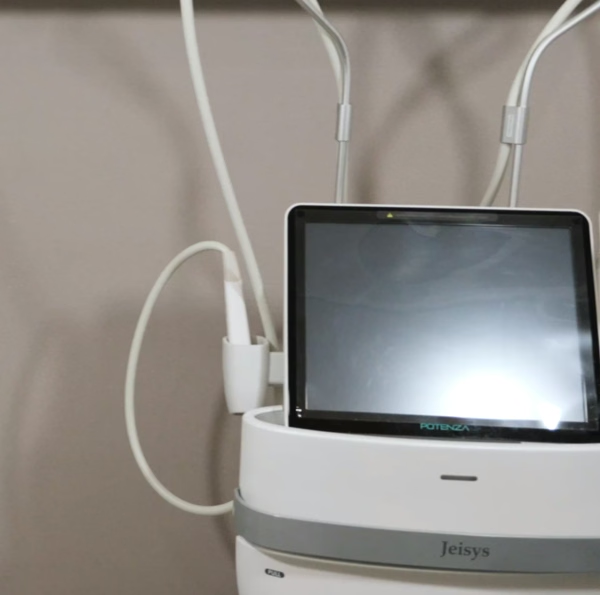
Potenza is not one fixed treatment. Current manufacturer materials describe monopolar and bipolar RF at 1 or 2 MHz, with several needle arrays and tip designs. FDA records describe the platform as a software-controlled electrosurgical device that delivers RF through an electrode tip for soft-tissue coagulation and hemostasis.
The operating mode, physical needle depth, treatment area, number of passes and energy plan can change both the tissue response and the visible recovery. A platform name alone cannot tell an overseas visitor how the skin will look or feel by boarding time.
AP865's current official program lists Potenza for pores and skin texture. That confirms the program is within the clinic's stated scope; it does not confirm that Potenza is appropriate for a particular scar, pore concern, active skin condition or travel schedule. Suitability still requires an in-person physician assessment.
Expected recovery may be visible beyond the appointment
Cynosure's current patient information lists temporary redness and tingling, with a burning sensation possible during treatment. A 2026 systematic review of RF microneedling for facial rejuvenation synthesized 20 studies with 558 participants and reported that redness and swelling were the most common adverse events in the included literature and were generally mild and temporary.
That review covered different devices, settings, areas and study designs; its author group also disclosed industry affiliations. It supports a category-level description, not a Potenza-specific timetable or a promise that one person's skin will be camera-ready after a particular number of hours.
Pinpoint bleeding, tenderness, dryness, crusting, bruising or pigment change may also enter the clinical discussion depending on the procedure. Ask the treating physician which reactions fit the proposed setup, how long they may remain noticeable and which changes should trigger examination rather than reassurance by message.
Know the warning signs before leaving Seoul
In October 2025, the US FDA warned about reports of serious complications associated with certain uses of RF microneedling, including burns, scarring, fat loss, disfigurement and nerve damage. The communication concerns the procedure category; it does not say that every Potenza treatment causes these outcomes or provide a Potenza flight interval.
Contact the treating clinic promptly for severe or worsening pain, a burn or blister, marked or increasing swelling, unusual pale or dark color change, spreading redness, drainage, fever, new weakness or numbness, or another response that was not covered in the personal aftercare plan. A rapidly worsening or potentially serious symptom needs timely in-person medical assessment, not a boarding decision based on an article.
Do not use a departure deadline to normalize a reaction that needs review. If the clinician recommends observation, examination, local treatment or postponing travel, preserving continuity is more important than keeping the original itinerary.
Who may need to postpone or choose consultation only
A visitor with active inflammation, infection, an open lesion, an unexplained rash or a recent unexpected reaction in the proposed area should not assume that a generic online checklist clears treatment. The physician also needs a complete account of medicines, implanted devices, abnormal scarring, altered sensation and recent filler, biostimulator, thread, laser, ultrasound, RF or microneedling procedures by date and area.
The exact concern matters. Active acne, different acne-scar shapes, visible pores, fine texture, laxity and facial volume change are not interchangeable diagnoses. The physician may recommend a limited area, a different tip or depth, staged care, another treatment, more records, waiting or no procedure on this trip.
If the itinerary leaves no realistic time for observation or the visitor cannot access suitable care after departure, consultation only can be the more considered choice. A private concierge approach should protect that decision rather than turn a reserved appointment into pressure to proceed.
Flying is a continuity question as much as a cabin question
Commercial travel fixes the time you leave the treating clinic and can make a prompt examination harder after landing. The CDC Yellow Book gives broad advice to wait 7–10 days after laser treatments or cosmetic procedures involving the face, eyelids or nose, but it does not name Potenza or establish a device-specific rule for RF microneedling.
The useful question is therefore not whether aircraft cabins are universally prohibited after Potenza. It is whether the immediate response has been assessed, whether the skin barrier and symptoms are following the expected course, and whether a clinician can review the person if that course changes.
Share the flight date before treatment. Ask how much local observation the physician wants for the proposed setup, whether an important event or outdoor itinerary changes the plan and whether another procedure should be separated so that one recovery pattern can be distinguished from another.
Leave with the exact treatment record
Ask for a written record naming Potenza, the treatment date, areas, tip or needle array, monopolar or bipolar mode, frequency when relevant, physical needle depth, passes or other settings the clinic can appropriately document, expected reactions, personal aftercare and clinic contact. Keep it accessible during travel.
Confirm which questions can be reviewed remotely, what photographs may be useful and which symptoms require local in-person or urgent care. A video call can exchange information, but it cannot palpate tissue, measure sensation or safely assess every unexpected response.
If an additional topical or injectable product is proposed with microneedling, ask for its exact name, route, regulatory basis, sterility plan and evidence. Creating channels in the skin does not make every added product appropriate, and the recovery of a combination should not be represented as if it came from Potenza alone.
How AP865 can build a private recovery-aware plan
AP865's Private Skin & Aging Care Concierge direction fits Potenza planning when the visit begins with the person's skin concern, previous procedures, tolerance for visible recovery and travel responsibilities. The physician can then explain why a particular tip, depth, mode, area and sequence are being considered—or why treatment should wait.
For an international visitor, the experience should include an unhurried private assessment, a plan that can be understood, enough local observation, a written record and continuity after departure. Combining available procedures should never be the default when it would make recovery harder to interpret or reduce access to follow-up.
The goal is not to promise that a flight will be comfortable or that the skin will look unchanged. It is to make a defensible decision with the actual device setup, current skin condition and full itinerary visible to the treating physician.
COMMON QUESTIONS
Before you book
Does Potenza have an official no-fly interval?
No Potenza-specific waiting period before air travel was identified in the current manufacturer and US FDA materials reviewed. That absence is not personal clearance; the exact setup, immediate response, itinerary and access to follow-up should guide the physician's advice.
What can recovery look like after Potenza?
Current manufacturer information lists temporary redness and tingling and possible burning during treatment. RF microneedling studies commonly report temporary redness and swelling, while the exact response can vary with the tip, depth, mode, area, passes and individual skin.
Can I take a same-day flight after Potenza?
A same-day flight is not automatically appropriate just because no device-specific interval is published. It leaves little time to observe early recovery or obtain an in-person review, so the treating physician should assess the response and itinerary before departure.
Which symptoms should be checked before flying?
Severe or worsening pain, a burn or blister, marked swelling, unusual color change, spreading redness, drainage, fever, new weakness or numbness, or another unexpected response should be assessed promptly. Potentially serious or rapidly worsening symptoms need in-person care.
What Potenza details should I take home?
Keep the device name, date, areas, tip or needle array, RF mode, frequency when relevant, physical needle depth, passes or other settings the clinic can document, expected reactions, personal aftercare and clinic contact, plus instructions for local or urgent care.
SOURCES & FURTHER READING
Check the original information
- AP865 — official current program overview
- Cynosure — official Potenza patient information and safety boundary
- Cynosure — official Potenza RF modes and tip information
- US FDA — Potenza 510(k) summary K231216
- US FDA — RF microneedling safety communication
- PubMed — 2026 systematic review of RF microneedling for facial rejuvenation
- CDC Yellow Book — medical tourism and travel-associated recovery risks
Published October 21, 2026 · Last reviewed for factual accuracy October 21, 2026. Product availability, regulation and treatment protocols can change.